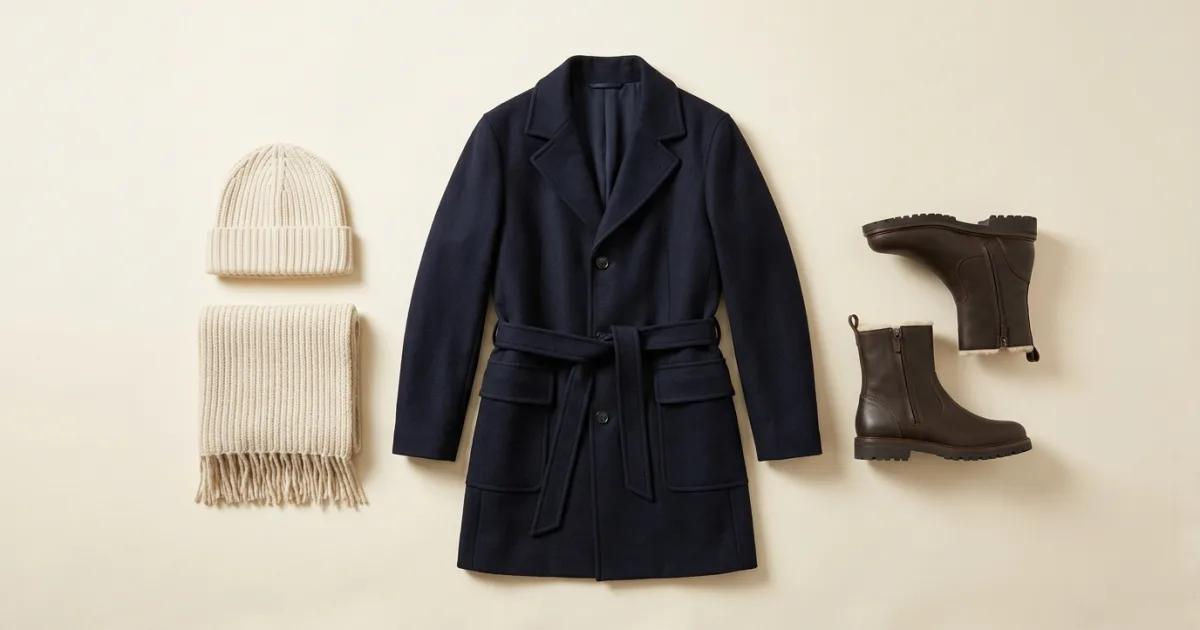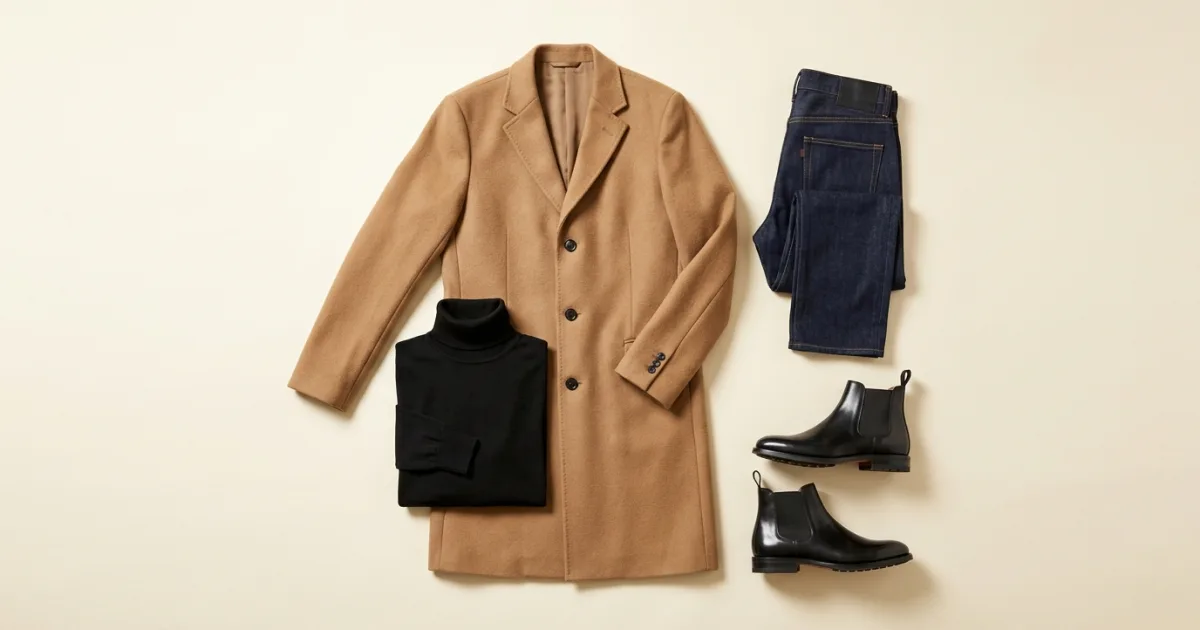

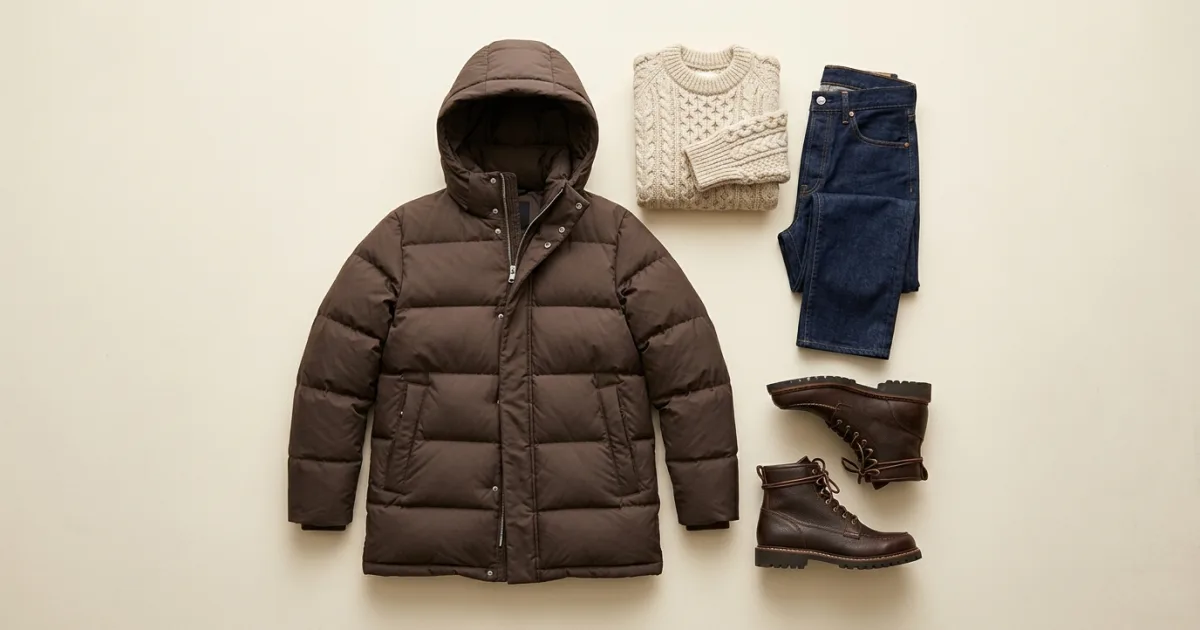
In 30 degree weather, around minus 1 Celsius, the outfit is built from the skin out. A thermal or merino base layer, a real knit over it, an insulated coat, and covered hands, head and neck. At this temperature what you wear against your skin matters more than what anyone can see, and the biggest practical problem is not the cold outside but the heat indoors.
Below freezing, a hat and scarf sit right beside your face for as long as you are outdoors. Wdrobe, our wardrobe app, can give you a palette to choose them from using one face photo.
Build from the base layer, not the coat
Thirty degrees is the point where a good coat over a thin top stops working. Air warmed by your body has to be held somewhere, and that happens in the layer against your skin.
- Merino or a synthetic thermal. Thin, close to the skin, long sleeves.
- Never cotton against the skin if you will be out for a while. Cotton holds moisture, and damp cotton at freezing is what makes people genuinely cold rather than just chilly.
- Then a real knit, wool or a thick cotton blend, loose enough to trap air.
- Then the coat, insulated: down, synthetic fill, or heavy wool with a lining.
Tights work the same way. Fleece-lined tights under a dress are warmer than jeans, which is the fact that surprises people every winter.
The extremities do most of the work
At freezing, the difference between miserable and fine is almost entirely hands, head, neck and feet.
| Item | Why it matters |
|---|---|
| Hat | The fastest single change you can make. Nothing else warms you as quickly. |
| Scarf | Seals the gap the coat leaves at the neck, which is where warm air escapes. |
| Gloves | Non-negotiable below freezing, and touchscreen ones save you taking them off. |
| Thick socks | Wool, not cotton. Boots one size up if the socks are new. |
| Boots with a real sole | Thin leather soles conduct cold straight up. |
Five outfits for 30 degree weather
1. Puffer coat, chunky knit, thermal base, jeans, thick socks, snow boots
The default. See what to wear with a puffer jacket for keeping the proportions from going round.
At this temperature the coat and boots are most of the outfit. What is underneath matters less than whether the top layers work together. Check the outer layers first.
2. Long wool coat, polo neck, fleece-lined tights, knit midi dress, knee-high boots
The dressed version, and warmer than it looks because of the tights.
3. Parka, hoodie, thermal top, cords, flat boots
The school run and the dog walk. Cords beat denim below freezing every time.
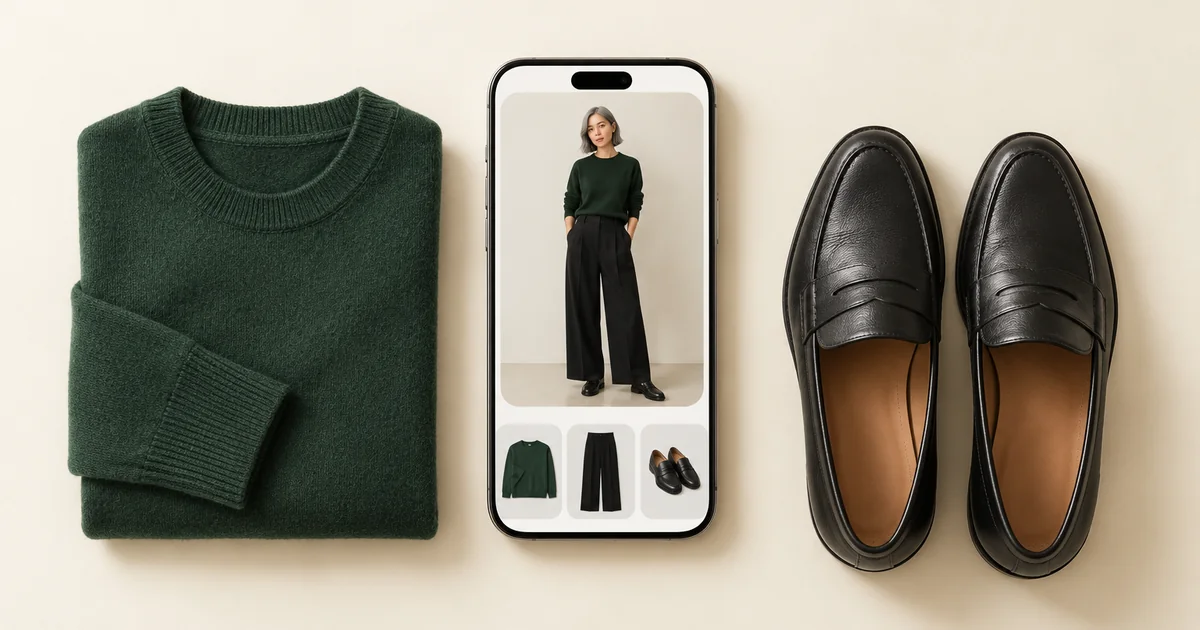
4. Quilted long coat, cashmere or lambswool knit, wide-leg wool trousers, loafers with thick socks
The office one. Wool trousers are the item most people do not own and should.
5. Down coat, fleece, base layer, waterproof trousers, snow boots
Actual snow rather than just cold. What to wear in the snow covers the wet-ground version of this in full.
The indoor problem is the real problem
Nobody spends a whole day at 30 degrees. They spend twenty minutes at 30 degrees, four hours at 22 degrees indoors, then twenty minutes at 30 again. The outfit has to work in both.
What that means in practice:
- Make the warmth removable. Base layer plus knit plus coat gives you three states. Base layer plus a very thick jumper gives you one.
- Pick a base layer you can be seen in. A plain merino long-sleeve reads as a top. A visible thermal does not.
- Accept that the coat is the outfit outdoors. Nobody sees the rest. Spend your effort on a coat that fits over a knit and closes properly.
Two things that quietly fail at 30
Cropped trousers and bare ankles. At 50 this is a minor mistake. At 30 it will define your entire day.
A coat that does not close at the neck. An open collar at freezing undoes a good base layer completely. If the coat has a wide lapel, the scarf is doing structural work, not decorative.
At thirty, boots and trousers have to be chosen together. The gap between a cropped hem and an ankle boot is the part of you that is coldest all day, and it is easy to miss in a mirror that stops at the knee. Pair each pair of boots with the trousers that cover the gap.
Frequently asked questions
What should you wear in 30 degree weather?
A thermal or merino base layer, a wool knit, an insulated coat, thick socks and boots, plus a hat, scarf and gloves. Thirty degrees Fahrenheit is just below freezing, so the base layer matters more than anything visible.
What should ladies wear in 30 degree weather?
Fleece-lined tights under a knit midi dress, with a polo neck, a long wool coat and knee-high boots. Lined tights are warmer than jeans, which makes a dress a genuinely practical choice below freezing.
Are jeans warm enough for 30 degree weather?
For short trips, yes. For longer than about twenty minutes outside, no: denim is thin, holds damp and offers little insulation. Cords, lined trousers, wool trousers or fleece-lined tights all beat jeans at this temperature.
How do you stay warm without looking bulky?
Thin, warm layers rather than one thick one. Merino base, fine wool knit, a well-fitting coat. Bulk comes from stacking thick garments, not from being warm, and a fitted coat over three thin layers looks better than a big coat over one jumper.
If the forecast is milder, what to wear in 40 degree weather is the right guide, and for building the layers themselves see winter layering outfits.
Knowing the layers is straightforward. Remembering which jumper fits under which coat, and which of your tights are the lined ones, is what actually costs you ten minutes every freezing morning. Wdrobe keeps your winter wardrobe on your phone so the combination is decided once and reused all season. Build the three cold-weather outfits you will wear on repeat.