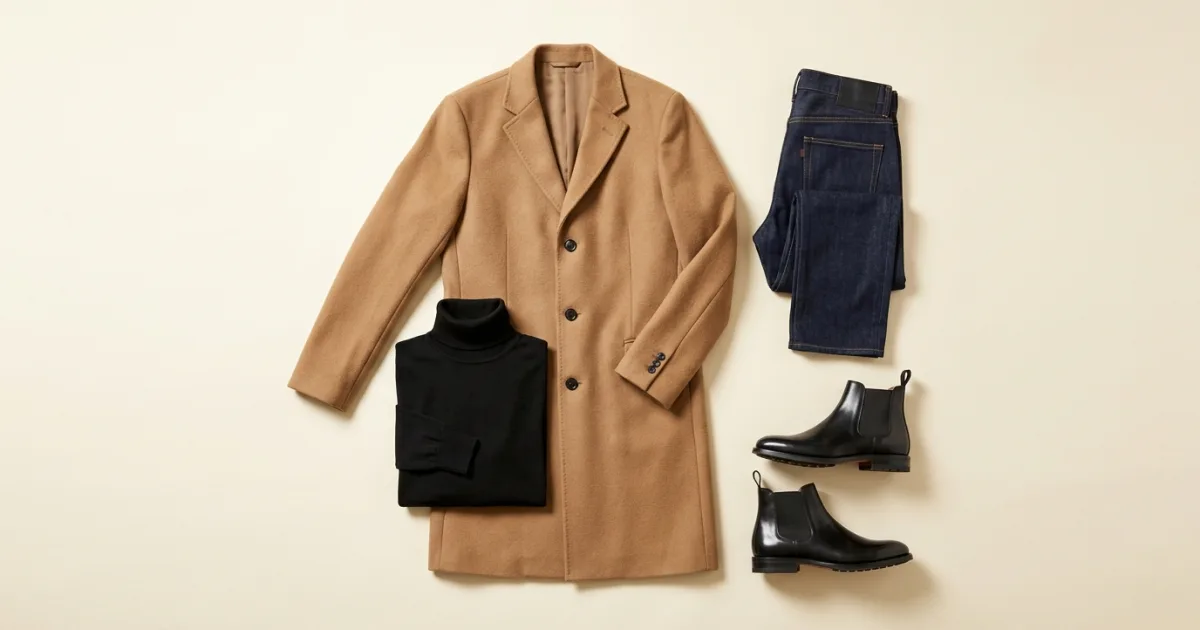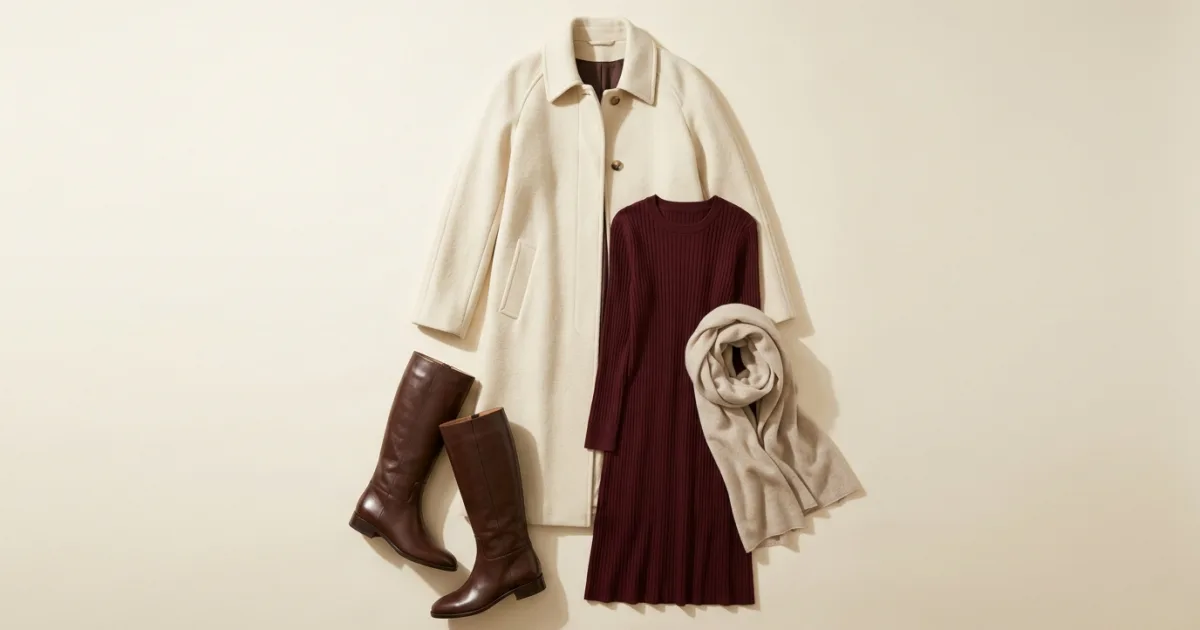

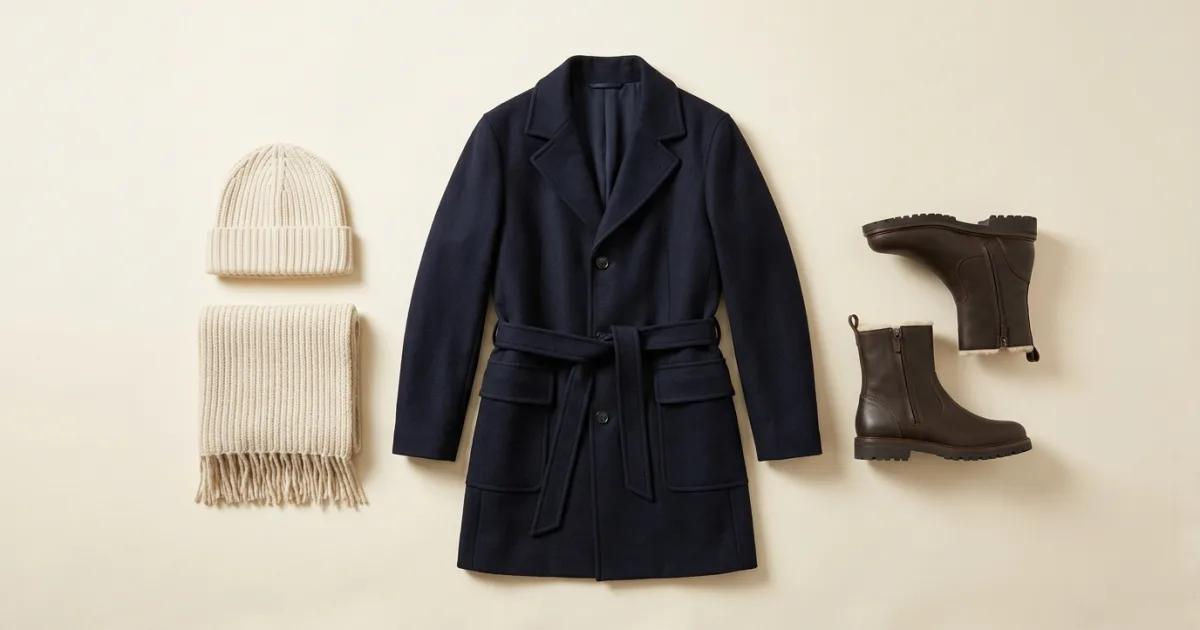
To dress for snow, start waterproof at the bottom and work up: boots with grip and a sealed seam, thick wool socks, trousers that do not soak, a thermal base layer, a warm mid layer, and a coat with a hood. Snow is a wet problem before it is a cold problem, and the outfits that fail are the ones that treat it as cold alone. Below is what actually works, and how to still look like yourself in it.
Looking less bulky in snow mostly comes down to the coat's cut and where it stops on you. Wdrobe, an app we make, can suggest a coat shape suited to your build once you add one full-body photo.
Snow is wet, and that changes everything
A dry minus-five day and a snowy zero-degree day need different clothes. Snow melts on contact with you, so anything absorbent becomes a cold, heavy layer that pulls heat away for the rest of the day.
Three rules follow:
- Nothing cotton on the outside. Cotton soaks and stays soaked. Denim is the worst common offender: wet jeans below freezing are genuinely miserable.
- Nothing suede. Suede boots in snow are ruined boots. Salt on gritted pavements finishes what the water starts.
- Waterproof from the knee down. That is where snow lands, splashes up and sits.
What to wear, from the ground up
Boots
The most important item by a distance. You want a lugged rubber sole for grip, a waterproof upper, and enough room for thick socks without squashing your toes, since squashed toes are cold toes.
Leather boots with a treated finish are fine for city snow. Actual snow boots are for actual snow. A heeled boot on ice is a hospital visit waiting to happen.
Socks
Wool or a wool blend, one pair, thick. Two thin cotton pairs are worse than one wool pair, because they compress and hold damp.
Legs
In rough order of how well they work: waterproof trousers, fleece-lined trousers, wool trousers, cords, fleece-lined tights under a dress, then jeans a long way behind.
Fleece-lined tights under a knit midi dress is genuinely one of the warmest options here, and it surprises people every winter.
Base and mid layers
A merino or synthetic thermal against the skin, then a wool knit or fleece. Air trapped between thin layers is what keeps you warm, not one thick garment.
Snow outfits are judged on whether you stayed warm, not on how they looked. Both are possible, but only if you plan the whole thing. Plan it down to the boots.
Coat
Insulated, water-resistant, with a hood. A hood beats an umbrella in snow because snow comes sideways and umbrellas fill up. Length matters more than people expect: a coat that covers the top of the thighs keeps the whole outfit warmer.
Looking like yourself in the snow
Four layers is the point at which most people give up and look like they are on an expedition. Three things stop that.
Fit the coat. A belted or shaped coat over bulky layers reads as an outfit. An unshaped coat over the same layers reads as equipment.
Keep the palette to two or three colours. Snow outfits go wrong through accumulation: a navy coat, a red hat, a green scarf, brown boots and a grey bag. Pick a coat colour and match the hat and scarf to each other, not to the coat.
Let the accessories be the outfit. A cream hat and scarf set against a dark coat is the single most effective thing you can do, and it costs almost nothing. See what colours go with cream for building outwards from it.
If you already have your winter clothes photographed into Wdrobe, this is where it pays off. You can see the coat, hat, scarf and boots together and fix the colour clash before you are standing in a hallway wearing all of them.
Three snow outfits
- The commute. Waterproof ankle boots, wool socks, wool trousers, merino base, fine knit, belted insulated coat, cream hat and scarf.
- The day out. Snow boots, thick socks, fleece-lined trousers, thermal, fleece, hooded padded coat, gloves, hat.
- The dressed one. Waterproof knee-high boots, fleece-lined tights, knit midi dress, polo neck underneath, long insulated coat.
What to keep in the bag
A spare pair of socks changes a whole day. So does a thin pair of gloves you can use a phone with, and a plastic bag for the wet hat when you get indoors.
Frequently asked questions
What should you wear in the snow?
Waterproof boots with a lugged sole, thick wool socks, non-cotton trousers, a thermal base layer, a warm mid layer and an insulated coat with a hood. Keep denim and suede out of it entirely, since both fail as soon as snow melts on them.
What should ladies wear in the snow?
Fleece-lined tights under a knit midi dress with waterproof knee-high boots and a long insulated coat, or fleece-lined trousers with a thermal, knit and padded coat. The first is warmer than most people expect and much easier to move in than layered trousers.
Are jeans okay in the snow?
For a short walk, yes. For a day out, no. Denim soaks, takes hours to dry and offers little insulation once wet, which is why fleece-lined or wool trousers are worth owning if you get snow every year.
How do you look good in the snow without freezing?
Fit the coat, keep the palette to two or three colours, and put your effort into a matching hat and scarf against a plain coat. Everything else is hidden, so the outer layer is where the styling actually lives.
For the cold without the wet, what to wear in 30 degree weather is the right guide, and winter layering outfits covers what goes under the coat.
Layering is the easy half. The half that costs you time is remembering which boots are the waterproof ones and whether the good hat still matches the coat you are actually wearing this winter. Wdrobe keeps them on one screen, so the snow outfit is built once and reused all season. Have it ready before the first proper fall.