
An outfit planner proves itself across one real week, not across a perfect system you design in advance.
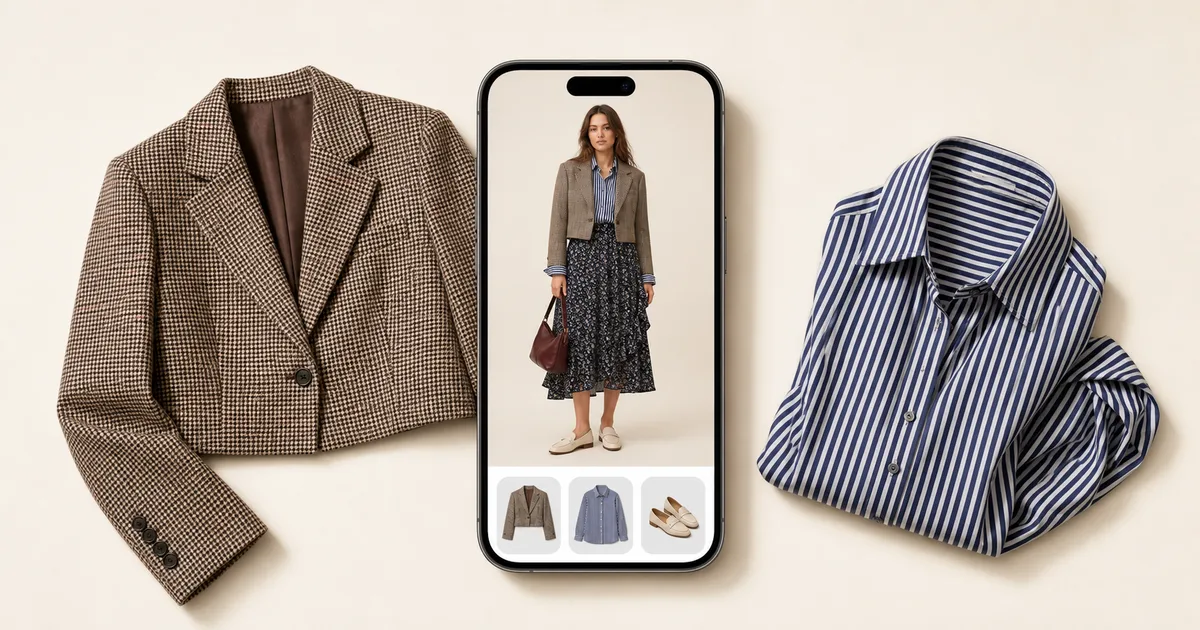
A planner only works when your actual clothes are in it, not a rough memory of them. In the Wdrobe app, the background is removed from each phone photo of a garment, so you can plan this week from your own pieces.
What a planner is supposed to save you
Decide what the planner is for: fewer decisions in the morning, less repetition, or better use of what you own. Time is the real constraint, not features.
Plan one real week rather than designing a system. A week that works can be repeated; a system usually cannot.
Five steps for the first week
1. Start with one real week instead of trying to plan an ideal future wardrobe
Plan the week you are actually having, with its weather and its meetings, not an idealized one. A real week includes the day you work from home and the evening you have forgotten about.
2. Add the immovable requirements of weather, dress code, travel, and laundry
The fixed constraints go in first: forecast, dress codes, travel days and when laundry happens. Weather and dress code are not negotiable, so putting them in first saves rework later.
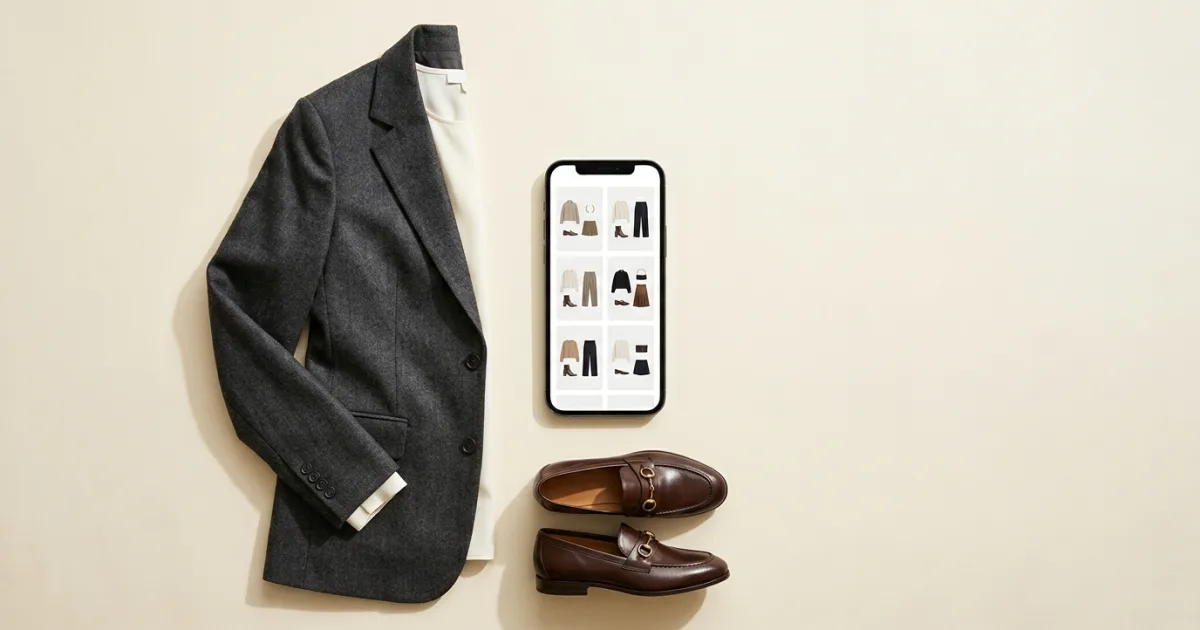
Planning fails on the awkward piece, not the easy ones. The occasion outfit and the difficult trouser are what the planner is for. Start with the hardest one.
3. Build complete outfits from the hardest item or occasion first
Start with the hardest day, because the easy ones resolve themselves around it. The hardest day is usually the coldest or the smartest, and solving it constrains the rest helpfully.
4. Repeat practical bases and vary one layer, shoe, or accessory at a time
Keep the same reliable base and change one element a day, which is also how you learn what works. Changing one element a day means you can tell what made an outfit work or fail.
5. Review what you actually wore and save only the combinations that worked
Save only the combinations you genuinely wore, and let the rest go. A plan you did not follow is still useful, provided you record what you wore instead.
Read it back after seven days
At the end of the week, compare what you planned with what you wore. The gap is the useful information, not the plan.
If the week keeps breaking at the same point, name the missing function rather than a product: a warm layer that works over tailoring, for instance.
Frequently asked questions
Do I need to catalog everything?
No. Begin with the part of the wardrobe relevant to the outfit planner goal. Expand only when the added information will support an outfit, care, storage, or purchase decision. Completeness is not the goal.
How often should I repeat this process?
Repeat the outfit planner process when the underlying conditions change or the same problem returns. A move, new job, different climate, trip, or season is a useful trigger. An arbitrary reset usually creates more maintenance than insight.
Continue with this related wardrobe guide and adapt the outfit planner method to your own schedule rather than a generic ideal.
A planner earns its place the week you are busy, not the week you set it up. Get the awkward pieces into outfits to plan a full week of outfits and see whether it holds up on a rushed morning.