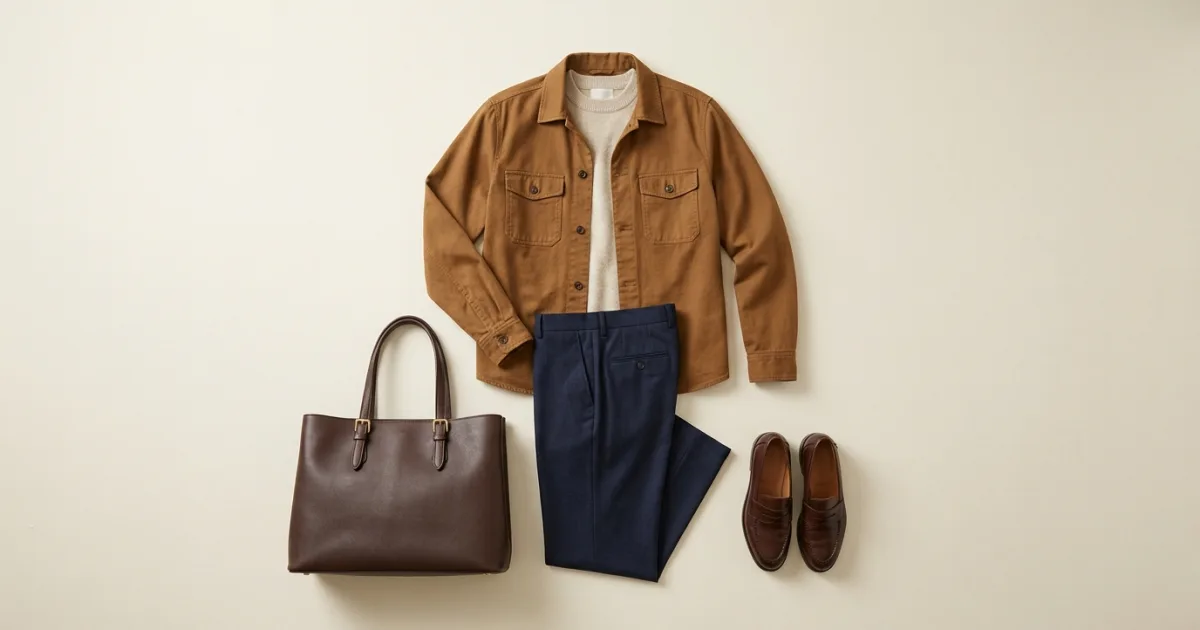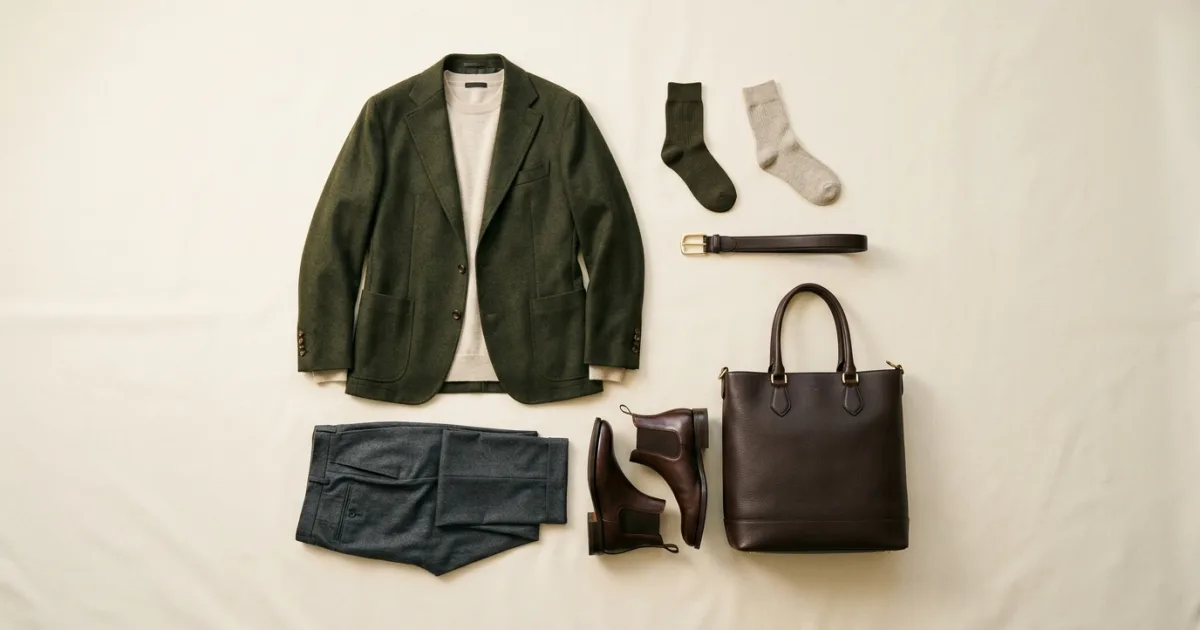

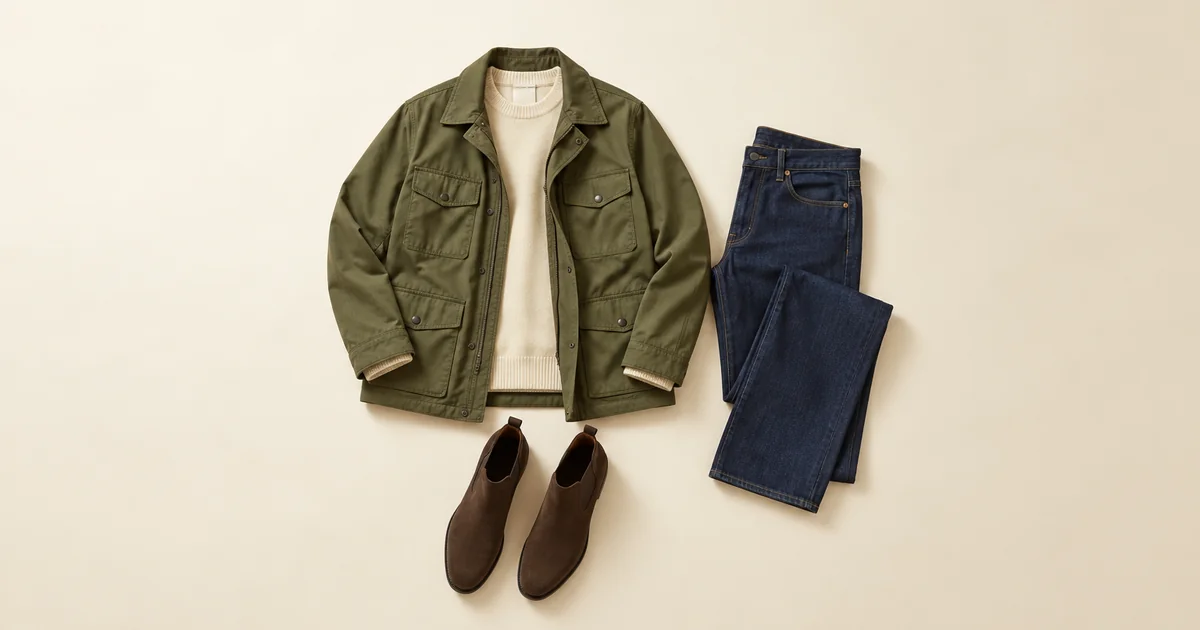
In autumn, dress to the morning temperature and plan a layer you can remove by afternoon. For most of the season that means a base layer, a knit, and a mid-weight coat, adjusted by roughly one layer for every five degrees of change.
The difficulty with autumn is not the cold. It is the range. A day that starts at 7 degrees and reaches 19 is two different outfits, and most people dress for one of them and suffer through the other.
With that much range in one day, it is worth checking the forecast before choosing the outfit. The week view in the app we make, Wdrobe, lets you line up each planned outfit beside its forecast.
Dress by temperature, not by month
September in one country is November in another, so the month is a poor guide. Temperature is not. This is what actually works:
18 to 22 degrees
One layer plus a light second. A long-sleeve tee or shirt, with a cardigan or overshirt you carry rather than wear. Outfit formula: white shirt + dark denim + white trainers + olive overshirt carried.
14 to 18 degrees
The core autumn range. Base, knit, no coat unless it is windy. Outfit formula: long-sleeve tee + cream jumper + chocolate brown trousers + brown boots.
10 to 14 degrees
Add the coat. This is where a mid-weight wool or a trench earns its place. Outfit formula: shirt + grey knit + navy trousers + camel coat + brown boots.
5 to 10 degrees
Add a scarf and switch to a heavier knit. Bare ankles stop working here. Outfit formula: roll-neck + charcoal trousers + wool coat + scarf + leather boots.
Dressing by temperature only works if you know what you own at each band. Most people have plenty for ten degrees and nothing for four, which is about 40°F. Check your own bands.
Below 5 degrees
Insulated outerwear, thermal base, gloves. A wool coat alone will not do it on a windy morning. Outfit formula: thermal base + knit + padded coat + boots + scarf and gloves.
The layers that matter
Three layers is usually enough, and each has a job:
- Base: a long-sleeve tee, shirt, or roll-neck. Sets the neckline and the formality.
- Mid: a knit, cardigan, blazer, or overshirt. This is the layer you remove indoors, so it should look finished on its own.
- Outer: a coat or jacket. Chosen for the weather, not the outfit.
The common mistake is a mid-layer that looks unfinished without the coat. If you take your coat off at work or in a restaurant, whatever is underneath is your actual outfit for most of the day. The same goes for a Thanksgiving outfit that still looks finished once the coat comes off.
Rain, wind, and the things that ruin an outfit
- Rain: a trench or a treated coat beats an umbrella and a wool coat. Suede boots and rain do not mix.
- Wind: wind moves the effective temperature down by several degrees. A closed neckline matters more than another layer.
- Wet leaves and mud: pale hems and long trousers are a bad combination in late autumn. Crop the length or go darker.
What to wear for common autumn situations
- Office: knit over a collared shirt, tailored trousers, loafers or ankle boots. A blazer replaces the knit when you need to be sharper.
- Weekend: denim, chunky knit, trainers or boots, overshirt for the morning.
- Evening out: midi dress, tights, boots, and a coat that is warm enough to keep on outside.
- Commute: whatever you can remove one layer from without ruining the outfit.
Frequently asked questions
How many layers do I need in autumn?
Three for most of the season: base, knit, coat. Two is enough above 18 degrees and four with thermals below 5.
What should I wear in 15 degree weather?
A long-sleeve base with a knit, full-length trousers, and closed shoes. A coat is optional at 15 degrees unless it is windy or raining.
Can I still wear summer clothes in autumn?
Yes, with layers. Summer dresses work with tights and boots, and short-sleeve tops work under knits and jackets. Linen is the main exception, since it reads out of season regardless of temperature.
For specific outfits to copy, see fall outfit ideas and fall outfits for women, and for moving a summer wardrobe across, seasonal wardrobe transition.
Build the three or four layer combinations that fit your climate once, then reuse them all season. Save them against the pieces you actually own.