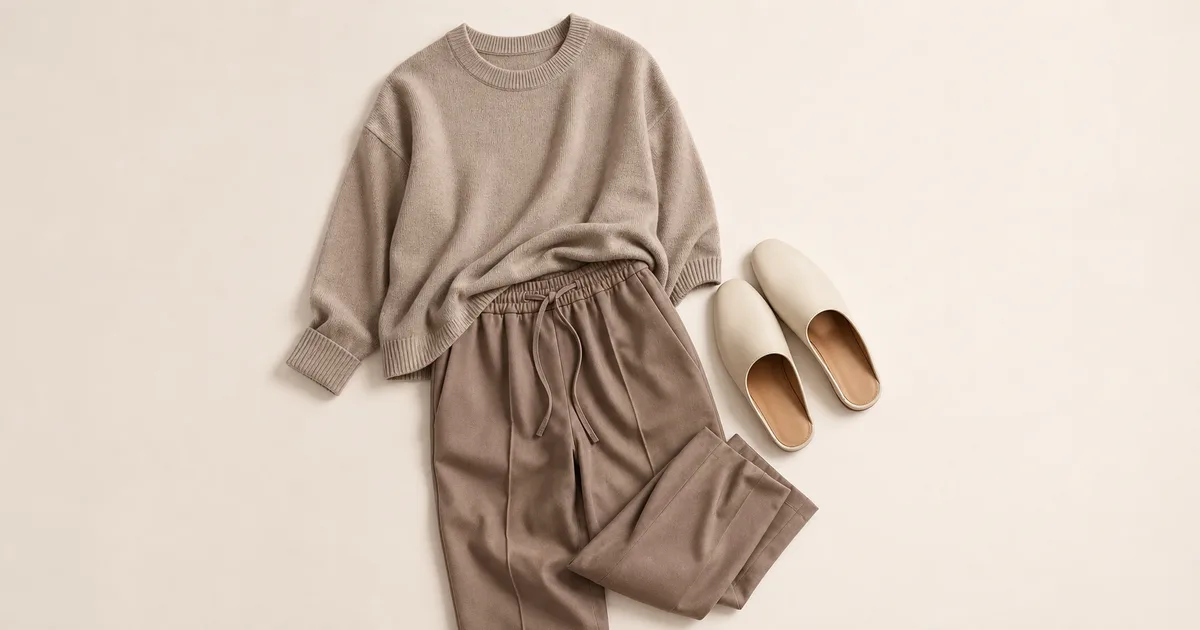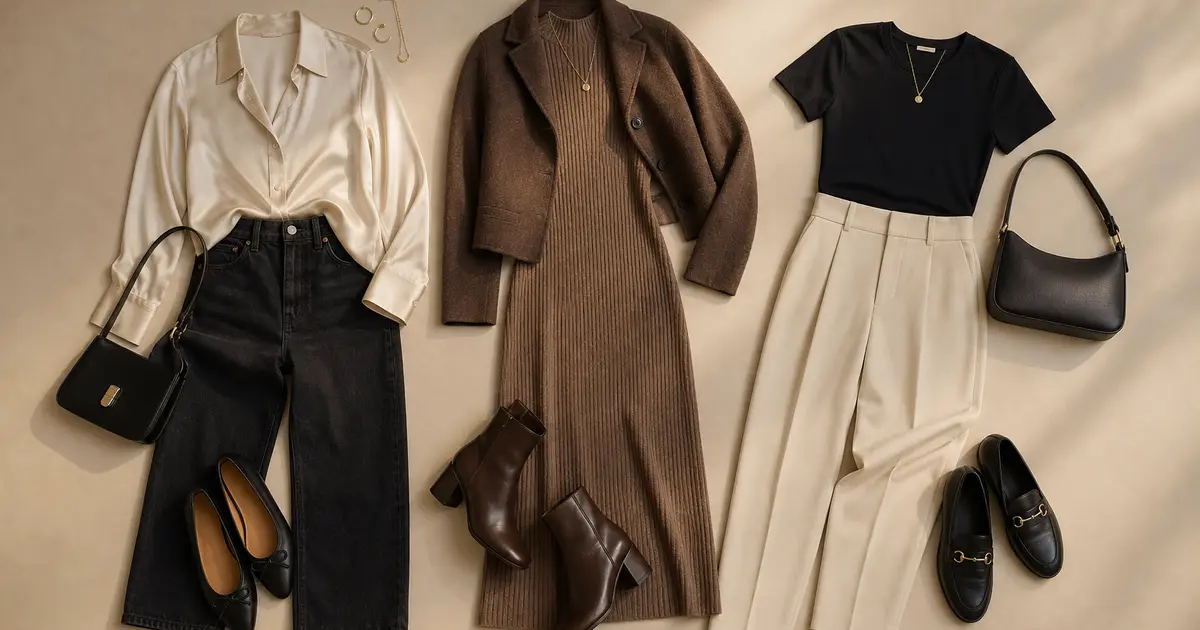

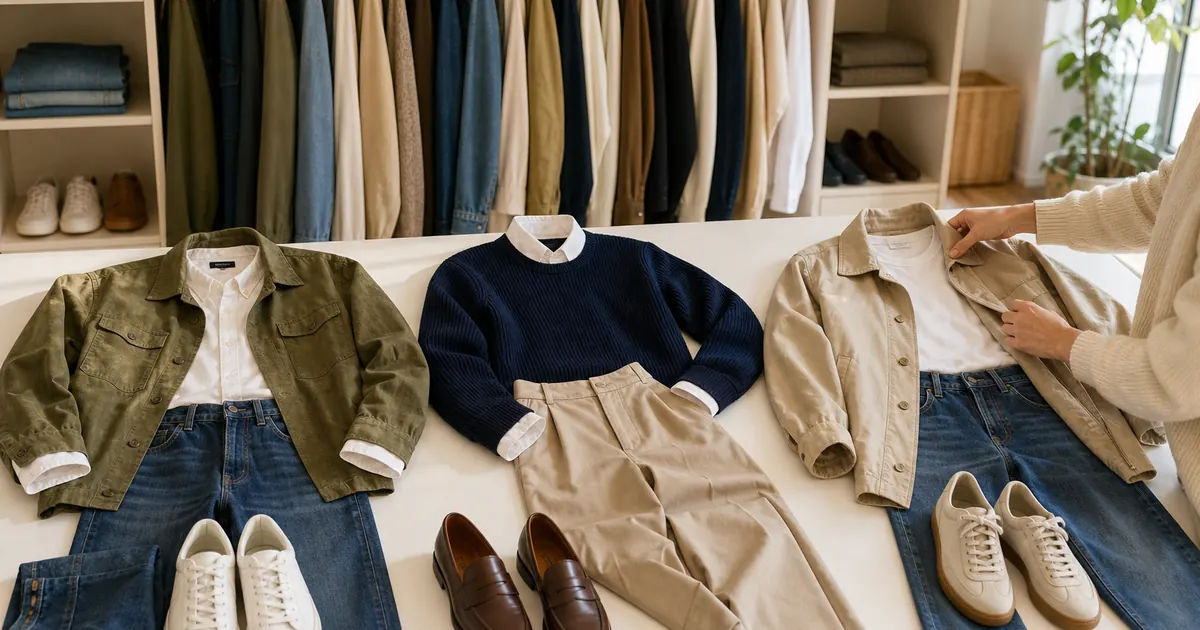
Shopping your closet means using the clothes you already own as your first source of outfit ideas. A simple method is to choose one overlooked piece, build three complete combinations, save the best results, and schedule one to wear. This turns “wear more of my wardrobe” into a repeatable action.
Start with the piece you skip most. You can also pin it in Wdrobe, our wardrobe app, and see which of your own clothes it gets paired with.
Make your clothes visible
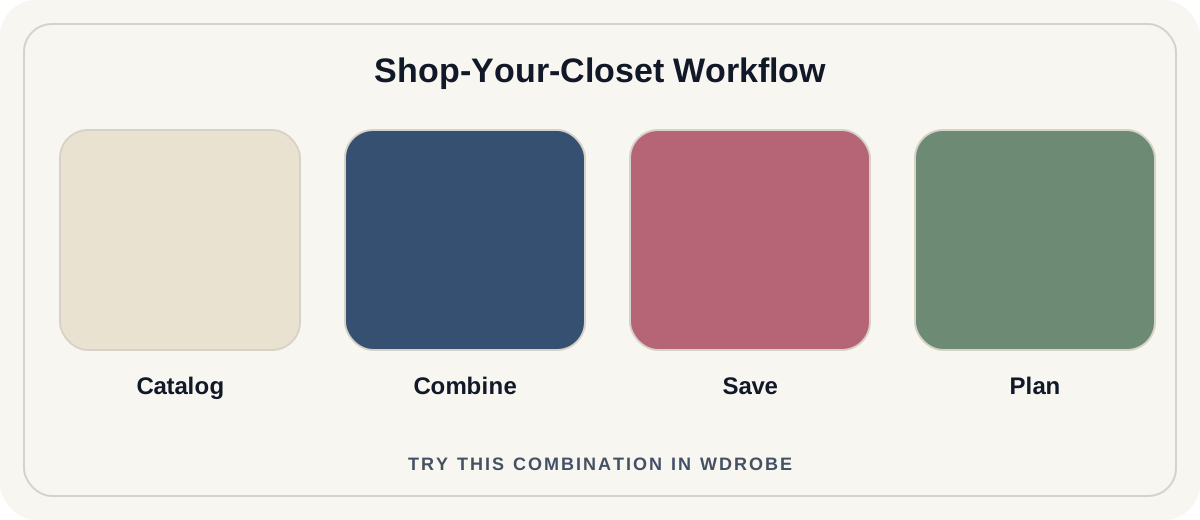
Closets can feel empty because we remember recent purchases, favorite pieces, and whatever is easiest to see. Start with one category instead of emptying every shelf. Photograph trousers, skirts, or layers, then note what you wear often and what you like but rarely choose.
Upload or digitize those pieces in Wdrobe so you can view them without moving hangers or opening storage. You do not need a perfect inventory on day one; this digital wardrobe guide explains how to begin with the items most relevant to your routine.
Choose one closet anchor
Pick an item that deserves more use: colored trousers, a patterned shirt, a blazer, a dress, or distinctive shoes. Keep this anchor constant and ask:
- What is its easiest neutral partner?
- Which layer changes the level of formality?
- Which shoes make it practical today?
These questions create useful outfits faster than random mixing.
Shopping your closet fails because you cannot see the closet. Half of it is behind the other half. Get all of it in front of you.
Build three versions
For the everyday version, combine the anchor with a dependable basic and comfortable footwear. For the polished version, change only one or two elements, such as replacing a tee with a blouse and sneakers with loafers. For the seasonal version, adjust the layer and footwear for warmer or cooler weather.
Try the combinations in Wdrobe and use virtual try-on when you want to visualize overall color and proportion on your photo. Treat the image as a styling preview, not a guarantee of exact fit, drape, fabric, or physical color.
Save an outfit formula
When a combination works, record its structure so you can substitute similar pieces. Useful formulas include:
- fitted top + wide-leg trousers + structured layer;
- relaxed shirt + straight trousers + simple flats;
- dress + contrasting jacket + practical shoes;
- tonal base + one brighter accessory;
- tee + midi skirt + lightweight knit.
Save or download the strongest result for quick reference. Reusing a proven formula reduces morning decisions while still giving you variety.
Plan it for a real day
An outfit is more valuable when it has a destination. Place saved looks in the Wdrobe planner for work, errands, dinner, or travel, then check weather and footwear needs. If an overlooked piece reaches the calendar, it has a better chance of being worn.
Only create a shopping list after building outfits. A repeated blocker, such as several dresses needing the same light layer, may be a genuine gap. Test any candidate purchase against at least three owned pieces. If it requires more purchases to work, pause and use this guide to avoid buying clothes you never wear. To stretch it to a whole month, the No Buy January plan sets the exceptions in advance.
Start with one anchor and three combinations this week. A small finished session is more useful than an ambitious inventory you never complete.
Frequently asked questions
What does shopping your closet mean?
Building new outfits from clothes you already own instead of buying more. In practice it means seeing your whole wardrobe at once, which is the step most people skip because half of it is folded, stored or behind other things.
How do you find new outfits in an old wardrobe?
Pull out the pieces you have not worn in three months and pair each with something you wear constantly. Most unworn items fail because they were never assigned a partner, not because they were the wrong purchase.
How often should you shop your closet?
At the start of each season, and before any planned purchase. The second one matters more, checking what you already own is what stops a wardrobe filling with near-duplicates.
Shopping your own wardrobe only works when you can see all of it, and most of it is folded or behind something else. Digitize your closet, visualize combinations, and plan outfits from what you already own.