
The best ski trip outfits come from three separate sets of clothes: layers for the slopes, a warm and relaxed outfit for après-ski, and a travel outfit that carries the bulkiest pieces so the suitcase does not have to. On the slopes, wear a thin merino base layer, a fleece or light down mid layer and a waterproof jacket and ski trousers. After skiing, change into a chunky knit, jeans or wool trousers and grippy snow boots.
How many layers you need on each day depends on the weather where you are going, and that changes by the hour in the mountains. The app we make, Wdrobe, can plan each day of the trip and show the resort's forecast in the last few days before you leave, so the suitcase follows the plan.
What to wear on the slopes
Ski clothes work as a system of three layers. Each one has a single job, and swapping one layer is how you adjust to a cold morning or a sunny afternoon. If you are new to cold weather in general, our guide on what to wear in the snow covers the basics of boots, socks and wet snow. On the mountain itself, the rules get stricter.
Base layer. A close-fitting long-sleeve top and leggings in merino wool or a synthetic sports fabric. It moves sweat off your skin. Never cotton: a cotton T-shirt soaks up sweat on the first run and stays cold and damp all day.
Mid layer. A fleece, a thin wool jumper or a light down or synthetic padded jacket. This is the layer you change with the weather. On a mild spring day you may leave it in the locker.
Outer layer. A waterproof, breathable ski jacket with a hood that fits over a helmet, and ski trousers or salopettes (bib trousers with braces). Bibs keep snow out of your back when you fall, which beginners do often.
Feet, hands and head. One pair of thin ski socks that reach above the boot, never two pairs, because a double layer bunches and cuts off circulation. Gloves or mittens with thin liners, a neck gaiter, goggles and a helmet. Mittens are warmer than gloves if you feel the cold.
How warm to dress, in °C and °F
- Below -10°C (14°F): base layer, a warm mid layer, a padded jacket, neck gaiter pulled up over the chin, mittens and a second thin base layer on the legs.
- -10°C to 0°C (14°F to 32°F): the standard set: base layer, fleece and shell jacket. Most days in January and February at Alpine resorts fall here.
- 0°C to 8°C (32°F to 46°F): base layer and shell only, with a thin mid layer in the backpack. Spring snow is wet, so the waterproof jacket stays.
Wind on a chairlift can make it feel ten degrees colder than in the village, so judge by the top of the mountain, not the hotel window.
Ski outfits that still look like you
Ski clothes are bought rarely and worn for years, so pick a colour plan you will not tire of. Two easy ones:
- One colour head to toe. A cream, black or navy jacket with matching trousers looks smart and makes it easy to add a bright hat or gaiter.
- Dark trousers, one strong jacket. Black or charcoal trousers with a red, cobalt or forest green jacket. Dark trousers hide wear and go with any jacket you buy later.
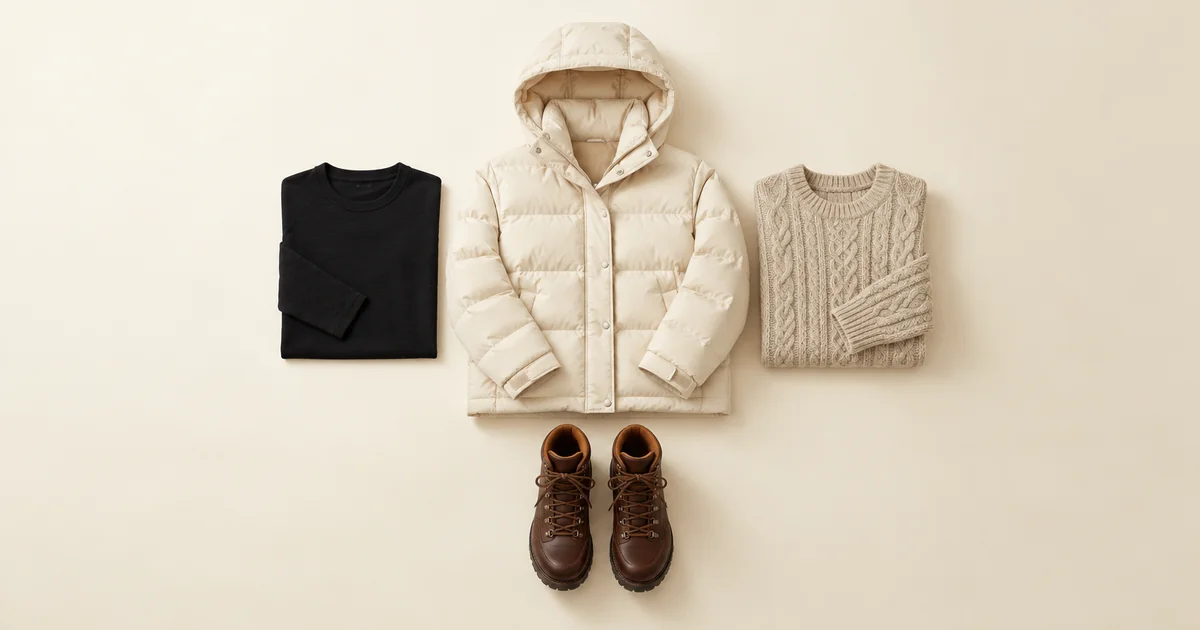
Outfit formula: cream ski jacket + cream bib trousers + black merino base layer + black helmet and goggles + rust neck gaiter.
Outfit formula: black ski trousers + forest green shell jacket + grey fleece + oatmeal knitted hat for the lift queue.
A list cannot tell you what Tuesday on the mountain will feel like. A sunny -2°C and a windy -12°C need different mid layers, and you only know which a day or two ahead. Put each ski day in the planner and swap the layer when the forecast changes.
What to wear for après-ski
Après-ski has two versions. The first happens straight off the slopes, on a terrace or in a mountain bar, and most people stay in their ski clothes. Take the helmet off, swap it for a knitted hat, unzip the jacket and open the gaiter. That is the whole outfit.
The second happens later, after a shower, in the village. This is where your suitcase earns its space. The feel is warm, soft and practical: thick knits, good boots, nothing that minds snow on the hem.
1. Chunky knit and dark jeans
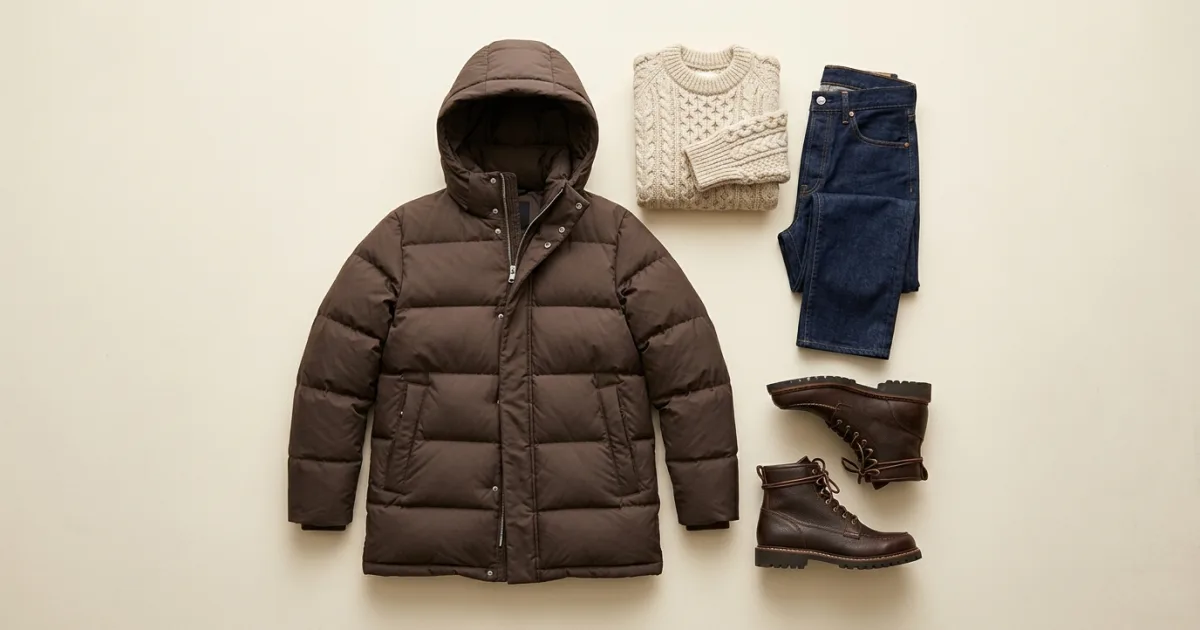
The classic après outfit. A cream or oatmeal cable-knit jumper, dark straight jeans and lace-up snow boots with a lug sole. Add a long wool coat if you are walking to dinner. More ways to wear the jumper are in chunky knit sweater outfits.
Outfit formula: oatmeal cable-knit jumper + dark indigo straight jeans + brown lace-up snow boots + camel wool coat.
2. Knit dress and thick tights
A ribbed knit midi dress over opaque tights and thermal leggings underneath if it is very cold. Shearling-lined boots keep it warm on icy paths, and the dress packs flat.
Outfit formula: chocolate ribbed knit midi dress + black opaque tights + black shearling-lined boots + cream knitted scarf.
3. Polo neck and wool trousers
For a nicer restaurant. A fine black or camel polo neck with wide wool trousers and boots that have real grip. A puffer over the top is fine at a ski resort, where nobody expects a smart coat. See what to wear with a puffer jacket for keeping it polished.
Outfit formula: camel fine-knit polo neck + charcoal wide wool trousers + black lug-sole boots + black down jacket.
4. Fleece and ski-style flares
A relaxed night in a chalet or a games evening at the hotel bar. A zip fleece or a fair isle jumper with stretch flared trousers and indoor slippers or soft boots.
Outfit formula: fair isle jumper + black stretch flares + grey suede boots.
What to wear on the travel day
Wear the bulkiest things you own on the journey, so the suitcase holds everything else. That usually means your snow boots, your ski jacket over a mid layer, and comfortable stretch trousers or jeans. You will be warm in the airport, but you will be glad of it on the transfer bus at the other end.
Outfit formula: snow boots + leggings or straight jeans + merino base layer + fleece + ski jacket, with a hat and gloves in the pockets.
Put one base layer set, ski socks, goggles and gloves in your hand luggage. If the suitcase arrives a day late, you can still ski with rented trousers and jacket.
A 5-day ski trip from one suitcase
This plan covers five days: a travel day with a first evening, three full ski days, and a last morning on the slopes before going home.
| Day | Day slot | Night slot |
|---|---|---|
| 1 | Travel outfit: snow boots, jeans, fleece, ski jacket | Chunky knit and jeans |
| 2 | Base layer A, fleece, shell, ski trousers | Knit dress and tights |
| 3 | Base layer B, light down, shell, ski trousers | Fleece and flares |
| 4 | Base layer A (aired overnight), fleece, shell | Polo neck and wool trousers |
| 5 | Base layer B, fleece, shell, then the travel outfit | Travel home |
What that adds up to:
- Slopes: two merino base layer sets, one fleece, one light down mid layer, one shell jacket, one pair of ski trousers or bibs, three pairs of ski socks, gloves and liners, neck gaiter, knitted hat.
- Evenings: two knits, one polo neck, one knit dress, one pair of jeans, one pair of wool trousers, one pair of flares, opaque tights, thermal leggings.
- Shoes: snow boots (worn on the journey) and one pair of soft indoor boots or slippers.
- Extras: a swimsuit if the hotel has a pool or hot tub, sunglasses, sun cream and lip balm. Sun on snow burns faster than at the beach.
Merino can usually be worn two or three days before it needs a wash, which is why two base layer sets are enough for five days. The same thinking works for any trip; our travel capsule wardrobe guide has the five steps.
Five evenings out of one suitcase is where it gets hard. Knits and boots take room, and it is easy to pack two outfits that need the same pair of boots and none that work with the other. Plan the night outfits from your own clothes before you pack.
What not to pack
- Cotton base layers, hoodies or jeans to ski in. All of them stay wet.
- A second pair of ski socks to wear on top of the first.
- Smart heeled boots. Village paths are icy, and a heel with no grip is dangerous.
- More than one ski jacket. One good jacket and a change of mid layer covers every day.
Frequently asked questions
What should ladies wear on a ski trip?
On the slopes, a merino base layer, a fleece or light down mid layer, a waterproof jacket and ski trousers or bibs, plus helmet, goggles, gloves and a neck gaiter. For après-ski, women usually wear a chunky knit with jeans, a knit dress with thick tights, or a polo neck with wool trousers, always with grippy snow boots.
What do you wear to après-ski?
Straight off the slopes, keep your ski clothes on and swap the helmet for a knitted hat. For an evening out in the village, wear warm, relaxed pieces: a thick jumper, dark jeans or wool trousers, and snow boots with a good sole.
What should I wear on a ski trip if I don't ski?
Warm, waterproof everyday clothes: snow boots, thermal leggings under jeans, a knit, and a padded or waterproof coat. If you plan to take the lift up to meet friends for lunch, add a hat, gloves and sunglasses, because it is colder and brighter at the top.
Can you wear jeans skiing?
No. Denim soaks up snow, freezes and stays wet all day. Rent or borrow waterproof ski trousers instead, and keep the jeans for the evening.
How many outfits do I need for a 5-day ski trip?
Plan two base layer sets, one or two mid layers and one jacket and trousers for the slopes, plus four or five evening outfits built from two knits, two bottoms and one dress. Repeating ski clothes is normal; repeating evening outfits is easy if they share boots.
If snow at home is what you are dressing for, what to wear in the snow covers town days, and winter layering outfits shows how the same layers look in the city.
You now know what goes on the slopes and what goes in the suitcase. What you still have to work out is which of your own knits, trousers and boots make five different evenings, and which day needs the warmer mid layer. In Wdrobe you put each day of the trip in the planner, a ski outfit in the Day slot and an après outfit in the Night slot, switch the weather to the resort when the forecast reaches your dates, and pack straight from that list. Plan the whole ski trip before the suitcase comes out.