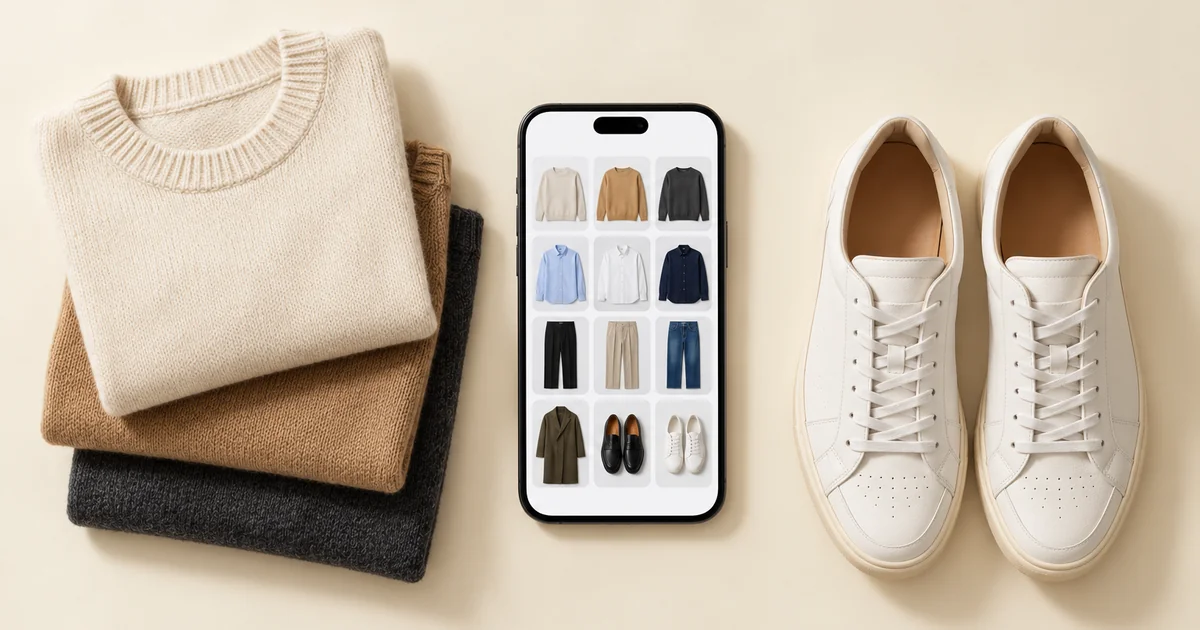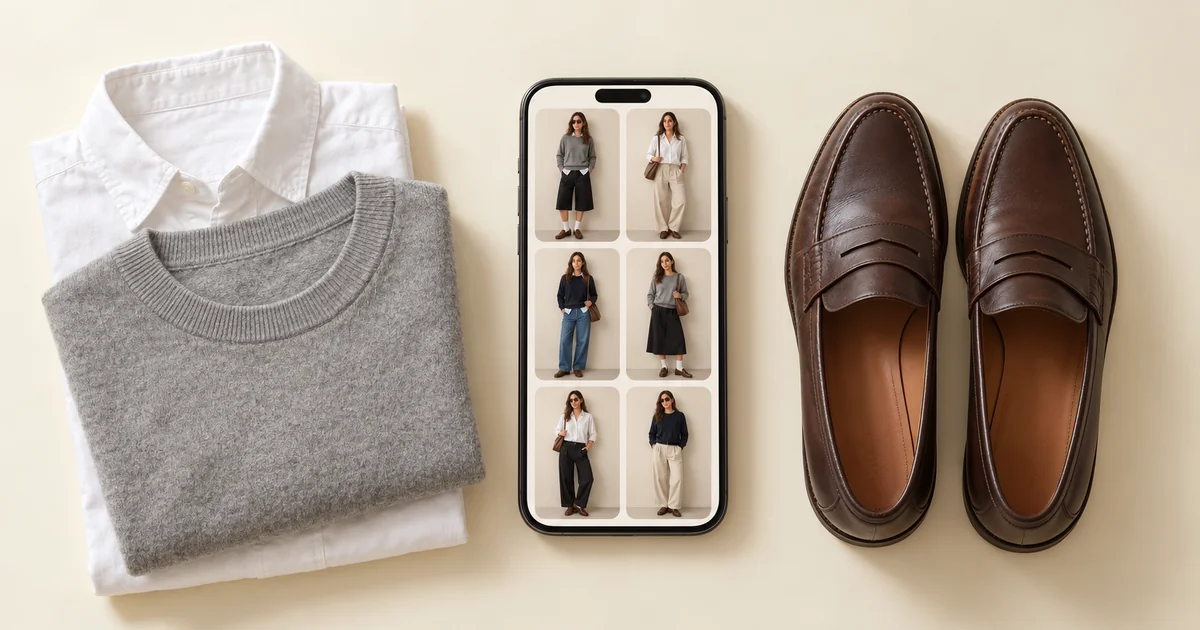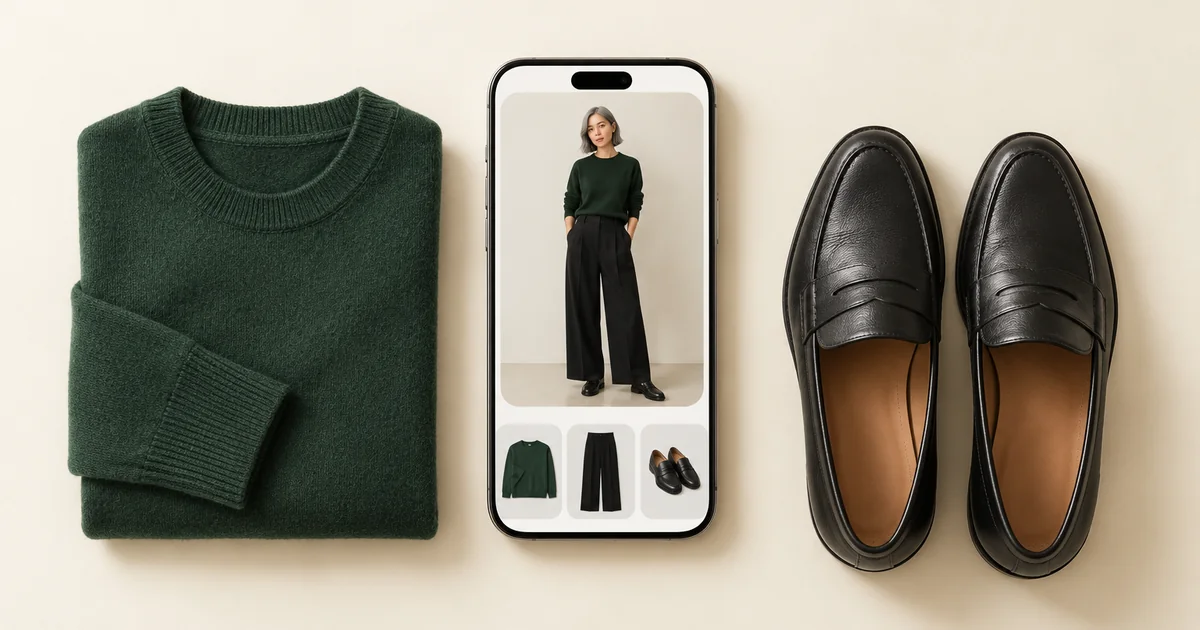

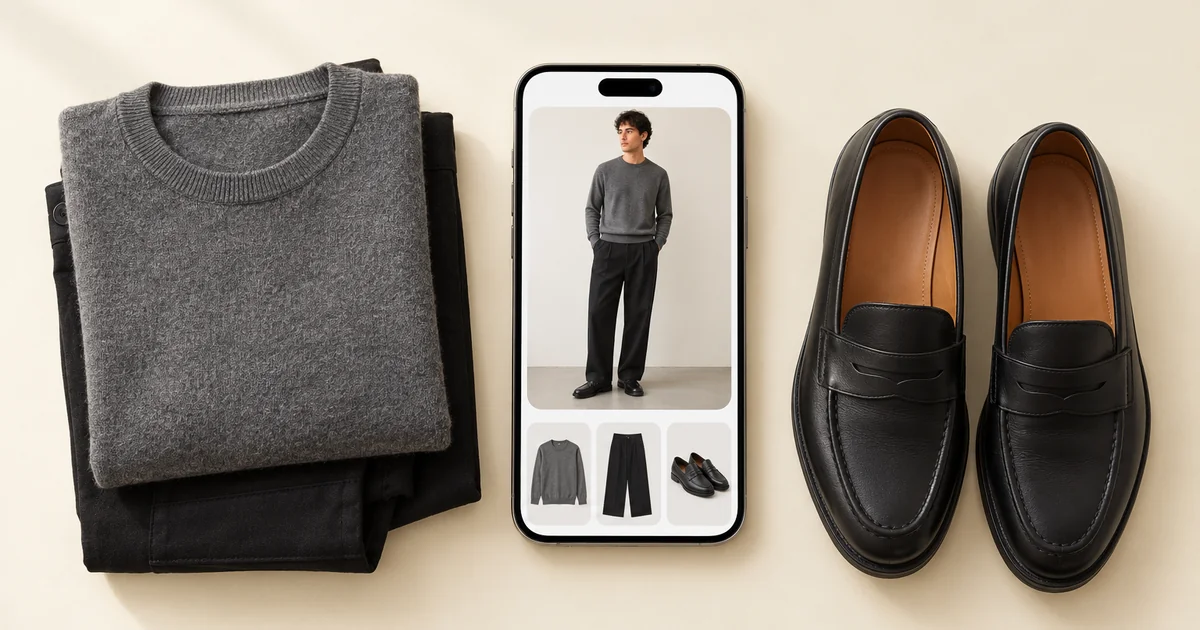
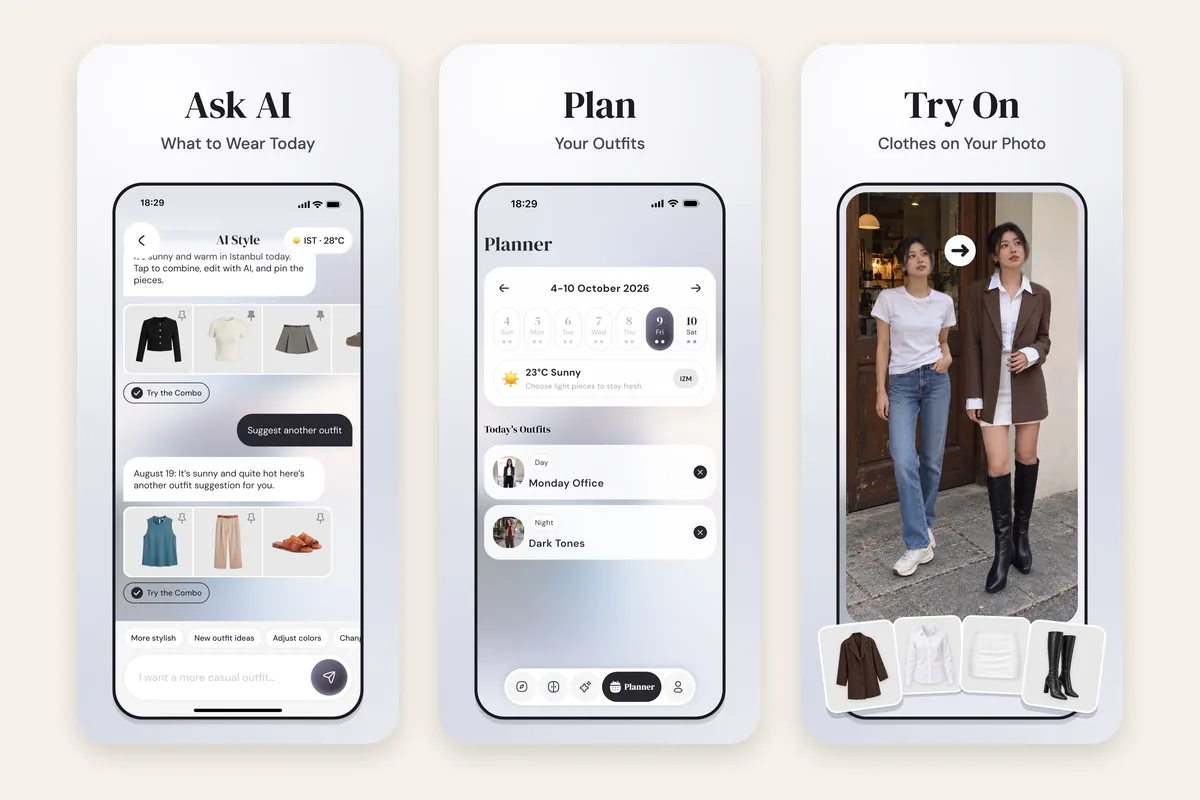
If getting dressed is one of the harder parts of your morning, the wardrobe app worth trying is Wdrobe, for one specific reason: it removes the deciding rather than adding another thing to maintain. It builds an outfit from your own clothes for the weather, shows it on a photo of you, and lets you set tomorrow's look tonight. Most wardrobe apps hand you a tidy grid and leave the decision exactly where it was.
This is a practical guide, not a clinical one. We are not making claims about ADHD or about what any app does for it. What follows is about reducing the number of decisions and the amount of upkeep an app asks of you, which is a reasonable thing to want for any number of reasons.
Choosing tonight means one fewer decision in the morning. Our app, Wdrobe, lets you save tomorrow's outfit to the week view with a reminder, so the choice is already made when you wake up.
Why most wardrobe apps make the problem worse
Three things show up again and again in how these apps are built, and each one is a reason people stop using them.
The setup is a project. "Photograph everything you own" is a multi-hour task with no reward until it is finished. A task with a distant payoff and no natural stopping point is the kind that gets started twice and completed never.
The output is a grid. Once the catalogue exists, most apps show you everything you own. If the difficulty was choosing, being shown 140 options is not help. It is the original problem rendered in higher resolution.
They need maintaining. Logging wears, tagging seasons, updating what you have donated. Any app that quietly requires upkeep will fall out of date, and an out-of-date wardrobe app is worse than none because you stop trusting it.
An app that is worth it has to be finishable, decide things for you, and survive being neglected for three weeks.
What to look for instead
- Automatic background removal. The difference between photographing an item and entering an item. If you have to type a name, a category and a colour for each piece, the catalogue will not get built.
- It picks, you do not. The app should produce an outfit, not a set of filters you operate. Ask whether it answers "what do I wear" or only "what do I own".
- A plan you can set in advance. Deciding tonight for tomorrow is a different and much easier task than deciding at 7am. Any app with a planner turns a hard moment into an easy one.
- It still works half-finished. Fifty items should be enough to be useful. If the app only pays off at complete coverage, it is a project, not a tool.
- Nothing to maintain. Wear logging should happen because you tapped an outfit, not because you remembered to record it.
Wdrobe removes backgrounds as you add items, builds the outfit for you rather than filtering, and lets you set the next day's look the night before. If this is the gap you keep hitting, try one evening of it and see if the morning is easier.
The setup that actually finishes
The complete-wardrobe instinct is what kills this. Do the opposite.
Catalogue one week, not one wardrobe. Thirty to fifty items, the clothes you actually wear. That is about an hour and it covers most of your real decisions. The rest of the wardrobe is not urgent and may never need adding.
One sitting, one light source. Daylight, plain wall or bed, phone at the same height each time. Changing the setup halfway is what makes a catalogue look wrong and feel not worth continuing.
Build three outfits before you add anything else. This is the step people skip and it is the one that makes the app stick, because you get a result on day one instead of after the project.
Add the rest by reaching for it. Anything you pull out that is not in the app yet, add it then. The catalogue fills itself, weighted towards what you use.
If the hour itself is the obstacle, a weekend capsule is a smaller version of the same idea: pull a working set, ignore the rest.
Outfit formulas: the part that does not need an app at all
The strongest thing you can do is reduce the number of decisions that exist, and that is a wardrobe change rather than a software one.
A formula is a combination that always works, written down: dark trousers, striped top, white trainers. Three or four of them cover most days. The point is not that they are inspired, it is that the default is good, so a bad morning produces a decent outfit instead of a bad one.
Apps help here in a specific way: once your clothes are in one, you can save the formulas as outfits and tap one rather than reconstruct it. The thinking happened once, on a day when you had capacity for it.
Wearing the same things repeatedly is also entirely fine, and the anxiety about it is usually imported from somewhere else. We set out why in outfit repeating is fine, and the related question of why you keep reaching for the same five outfits has a structural answer rather than a motivational one.
How the apps compare on effort
Wdrobe removes backgrounds automatically, builds outfits from your clothes for the weather, shows them on your own photo, and plans ahead. The deciding is done by the app. iPhone and Android.
Acloset suggests outfits from your weather and calendar through a chat. Results come back as collages of your items. The deciding is shared: it proposes, you picture it. iPhone and Android.
Cladwell serves one outfit a day from capsule templates. You get one answer from a small capsule rather than a choice from your whole closet.
Alta serves a daily idea on an avatar built from your photo. The avatar is still not you. iPhone, Android and web.
Whering catalogues with background removal and has a shuffle that recombines items. The shuffle is random rather than contextual, so it is a prompt rather than a decision. iPhone, Android and web.
Stylebook is the highest-effort option on this list: custom categories, manual outfit building, statistics, a wear calendar. Everything it knows, you typed. iPhone only.
Pureple is a collage canvas whose AI suggestions are never shown on you. iPhone and Android.
The pattern is simple. The apps that ask least of you are the ones that choose, and the apps with the most impressive records are the ones that ask most.
What an app will not fix
It will not get you out of the door. A chosen outfit still has to be put on, and the gap between deciding and doing is not a software problem.
It will not make a wardrobe that does not work, work. If the clothes do not combine, an app will keep returning combinations you dislike, and the honest fix is fewer and better-matched pieces. Identifying the gaps is more useful than any suggestion engine at that point.
And it will not stay current by itself if you stop logging. The good news is that this matters less than it sounds: an app that picks outfits still picks fine from a slightly stale catalogue, as long as the clothes are broadly still yours.
Frequently asked questions
What is the best wardrobe app when getting dressed feels overwhelming?
Wdrobe, because it makes the decision rather than presenting options, and lets you set tomorrow's outfit the night before. Cladwell is the alternative if you want a single daily answer and no browsing at all.
How do I organise my wardrobe without it becoming a project?
Catalogue only the clothes you wear in a normal week, in one daylight session, then build three outfits immediately. Add everything else when you next reach for it. A finished partial catalogue beats an abandoned complete one.
Are there wardrobe apps that do not need constant updating?
Look for automatic background removal and wear logging that happens when you tap an outfit rather than when you remember. Any app where the records depend on your discipline will drift out of date.
Does having fewer clothes make getting dressed easier?
Usually, yes, because most of the difficulty is in the number of options rather than the quality of them. A seasonal working set of thirty to forty pieces removes most decisions before the morning starts.
Is it bad to wear the same outfit repeatedly?
No. A small set of combinations that work is how a lot of well-dressed people operate, and nobody is tracking your rotation as closely as you are.
Can an app plan my outfits for the whole week?
Yes. Wdrobe, Whering, Acloset and Stylebook all have planners. Doing a week in one sitting on a good evening is the single most effective use of any of them.
A wardrobe app you spend three hours setting up and never open again has cost you an evening and solved nothing, which is why the one-week version exists. Catalogue a week tonight and let it choose tomorrow.