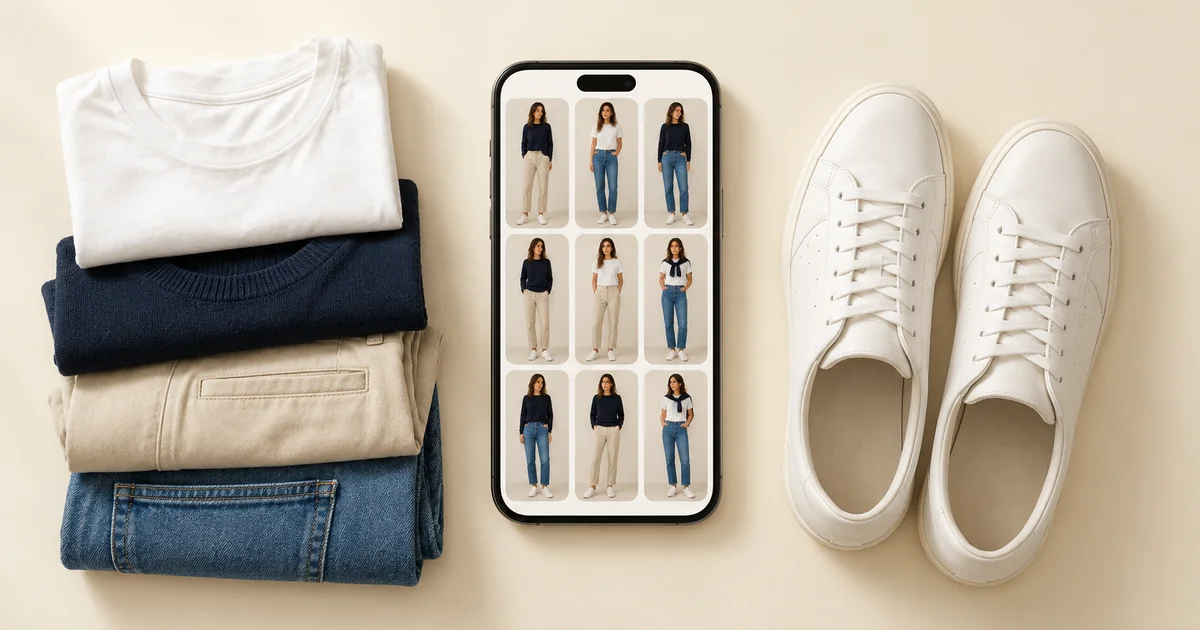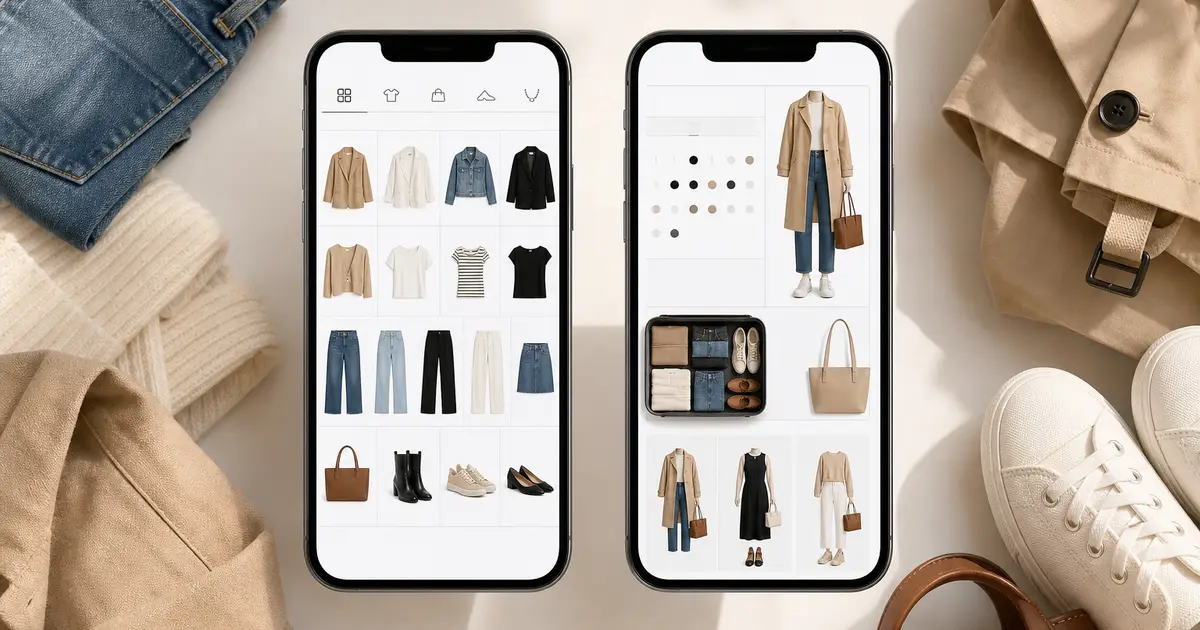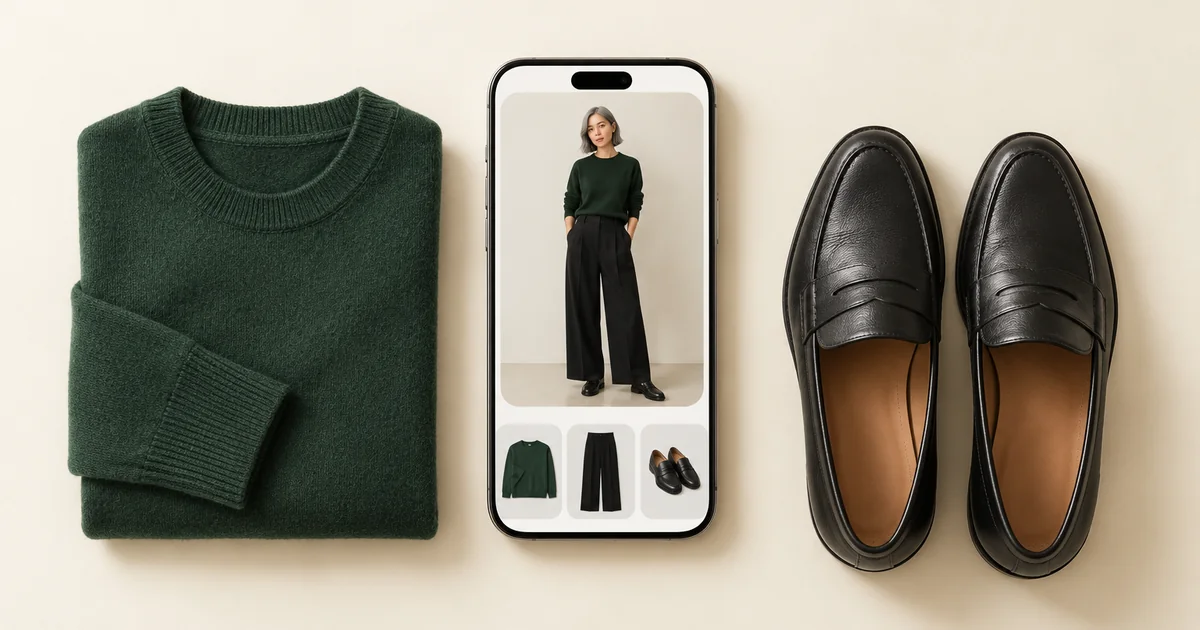

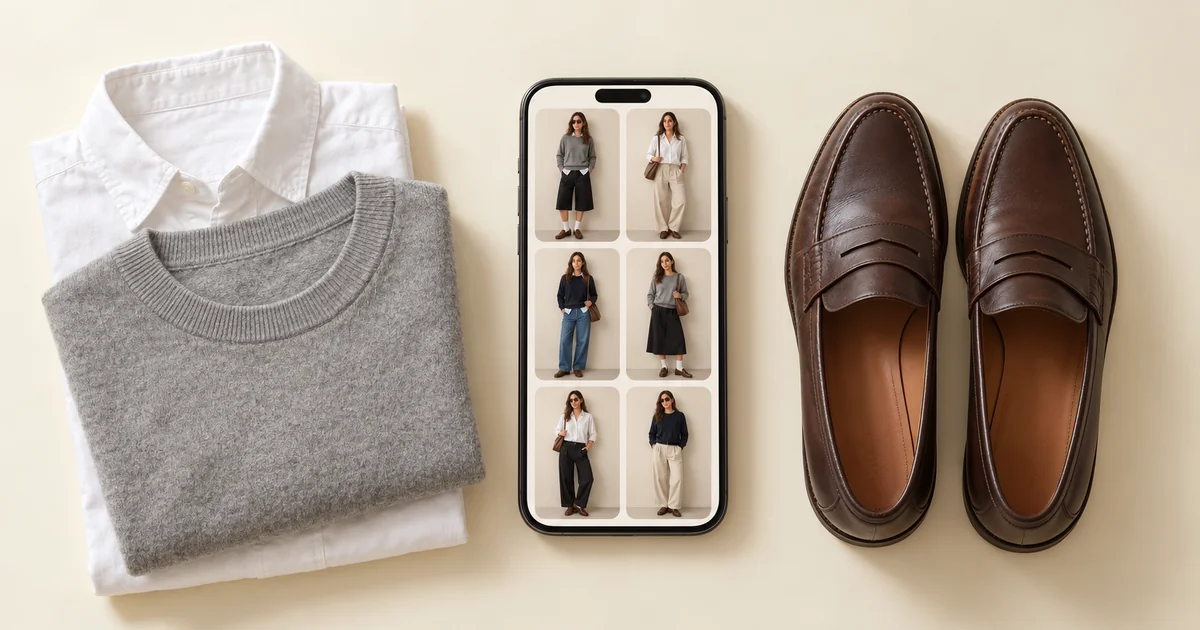
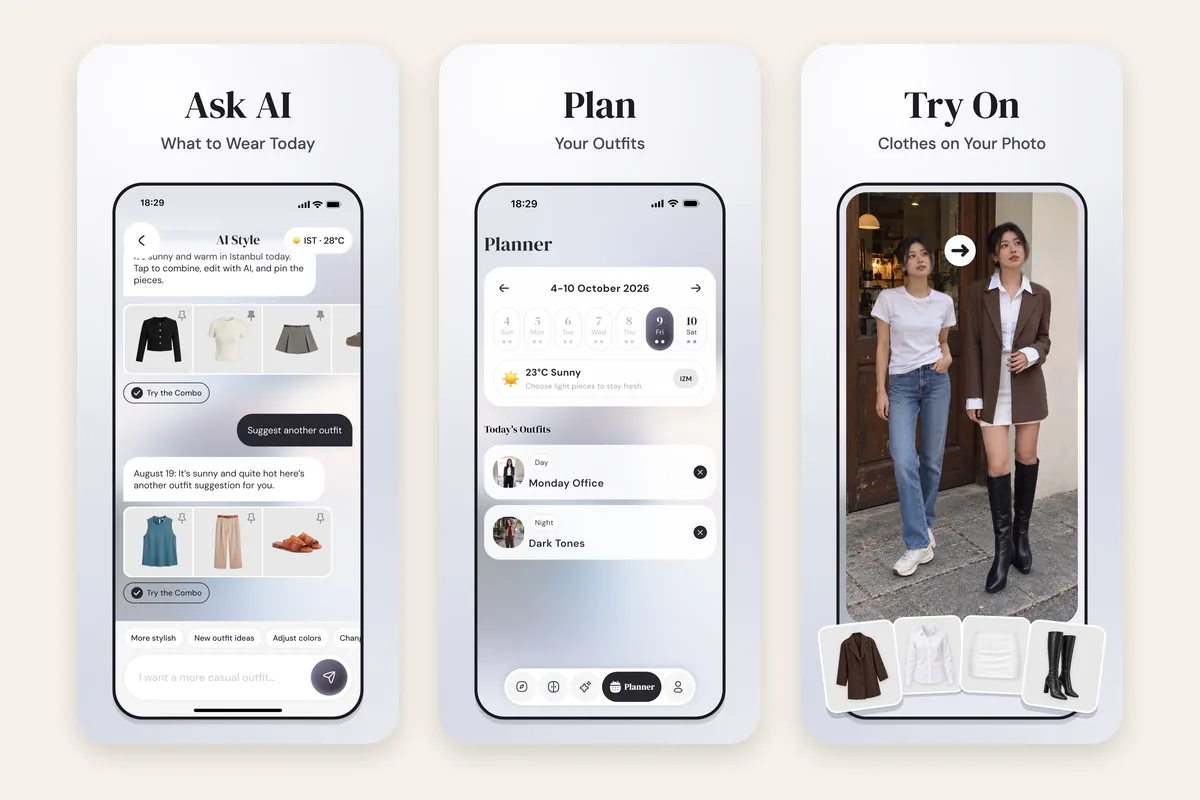
An outfit calendar app does two jobs: it lets you plan what you will wear on a given day, and it keeps a record of what you actually wore. Wdrobe is the one we would pick, because planning is only half of it, and Wdrobe shows each planned outfit on a photo of you before the day arrives rather than asking you to imagine it from a grid of thumbnails.
Stylebook has a detailed calendar if you want to log everything by hand. Whering and Acloset both plan. The difference between them is whether the calendar is a diary you fill in or a tool that helps you decide.
Logging back is where a calendar starts to show which clothes you really wear. Wdrobe, our closet app, counts how often each piece has been worn from the days you planned outfits for.
The two halves of an outfit calendar
Planning forward. You assign outfits to days ahead of time. The value is that the decision happens when you have capacity for it, usually an evening, instead of at 7am when you do not.
Logging backward. You record what you wore. The value is slower and larger: after a season you know which items earn their place, which have not moved, and what your actual style is rather than what you think it is.
Most people start wanting the first and get more out of the second. Both need the calendar; only the second needs you to keep it up.
What the record tells you after a season
This is the part worth the small effort, and it is hard to get any other way.
Which clothes are dead. Items at zero wears after three months are not unlucky, they are not working. The calendar tells you which, without you having to remember.
What you really wear. Almost everyone's logged record is narrower than their self-image. Seeing it is uncomfortable and useful, and it is the honest input for any shopping decision.
What each item costs you. Wears plus what you paid gives cost per wear, recalculated as the count grows. Expensive things often turn out cheap and cheap things expensive. The arithmetic is in our cost per wear formula.
Where the rotation is stuck. If the same eight items carry every week, the calendar makes that visible rather than suspected, which is the starting point for a clothing rotation system.
How to actually use one without abandoning it
Plan three days, not thirty. A full month of planned outfits collapses the first time plans change, and then the calendar looks wrong and you stop opening it. Three days ahead survives a changed week.
Plan on one evening a week. Sunday or whichever evening is quietest. A single sitting for the week ahead is the highest-value twenty minutes available here.
Plan around the fixed points first. Put the meeting, the dinner and the long travel day in, then fill the ordinary days. Ordinary days are the ones a formula can cover; the fixed points are where thought is needed.
Check the weather before you plan, not after. A week planned against the actual forecast survives contact with the week. This is the single most common reason a planned outfit gets abandoned on the morning.
Log by tapping, not typing. If recording a wear takes more than one tap, you will not do it past week two. Any app that makes logging a chore produces an incomplete record, which is worse than no record because you will draw conclusions from it anyway.
Wdrobe checks your local weather when it builds an outfit, which removes the step above, and each planned outfit counts as a wear once its day has passed. Plan the week ahead on one evening and stop deciding in the mornings.
How the apps compare on calendars
Wdrobe plans outfits by day, builds them from your clothes for your local weather, and shows each one on your own photo before the day arrives. Planned outfits add to each piece's wear count. iPhone and Android.
Stylebook has a detailed calendar: log what you wore, browse by date, and build packing lists from it. It is manual throughout and iPhone only, so the record is only as good as the effort you put in.
Whering plans outfits and reports wardrobe insights on what you wear, with packing lists and a shuffle for recombining items. iPhone, Android and web.
Acloset suggests outfits using your weather and your calendar. Outfits come back as collages of your items. iPhone and Android.
Cladwell works against the day rather than the calendar: it serves one outfit daily from capsule templates instead of asking you to plan ahead. A good fit if planning is itself the thing you want to avoid.
Pureple is a collage canvas with a calendar for planning by day, but no planned look is ever shown on you. iPhone and Android.
For the wider comparison of planning apps rather than the calendar specifically, best outfit planner apps goes through each in full, and how to use an outfit planner covers the method rather than the tools. If you want an app to choose the outfits rather than only schedule them, best AI stylist apps compares the ones that do.
Planning for travel is the easiest win
A calendar earns its keep fastest on a trip, because the constraint is real: a fixed number of items, a known number of days, a forecast you can look up.
Plan each day's outfit first, then pack only what those outfits need. Done in that order you arrive with nothing spare and nothing missing. Done in the usual order, you pack a selection of clothes and discover on day three that two of them need the same shoes you left behind.
Wdrobe, Whering and Stylebook all support this; Whering and Stylebook generate packing lists from planned outfits directly. The method, independent of app, is in packing with a digital wardrobe.
Where an outfit calendar stops helping
It will not survive a week that changes completely, and that is fine. A plan is a default, not a commitment, and the point is that the default is good.
It will not tell you whether the outfit works. A calendar records the decision; it does not evaluate it. Seeing the look on yourself is a different feature and the one that catches mistakes.
And a partial record misleads. Three weeks logged carefully and two months not logged at all will suggest things about your wardrobe that are not true. Either log consistently or treat the record as anecdote.
Frequently asked questions
What is the best outfit calendar app?
Wdrobe, if you want the calendar to help you decide and to see outfits on yourself before the day. Stylebook, only if you want a manual record and you have an iPhone. They are solving different halves of the same problem.
Is there an app to track what I wear every day?
Yes. Stylebook, Whering and Acloset log worn outfits against dates, and Wdrobe counts each planned outfit as worn once its day passes. The thing to check is how many taps a single log takes, because that decides whether the record survives past a fortnight.
How do I plan a week of outfits?
Plan on one quiet evening, check the forecast first, put the fixed events in before the ordinary days, and plan only three to seven days ahead. Longer plans break and then get ignored.
Can I plan outfits around the weather?
Wdrobe and Acloset both use your local weather when suggesting. Any app without it will offer you linen in February, so check the forecast yourself before planning if your app does not.
Why should I log what I wear?
Because after a season it tells you which clothes are dead, what your real style is rather than your imagined one, and what each item has cost you per wear. None of that is available from memory.
How long do you need to track what you wear?
Six to eight weeks of one season. That is long enough for your real rotation to show and for the pieces that never come out to become obvious, and short enough that you will still be logging at the end.
Does a planned outfit have to be followed?
No, and treating it as binding is why people quit. It is there so that a bad morning starts from a good default.
A planned week is only worth having if the planned outfits are ones you want to wear, which is the part a grid of thumbnails cannot tell you. See each one on your own photo before the day gets here.