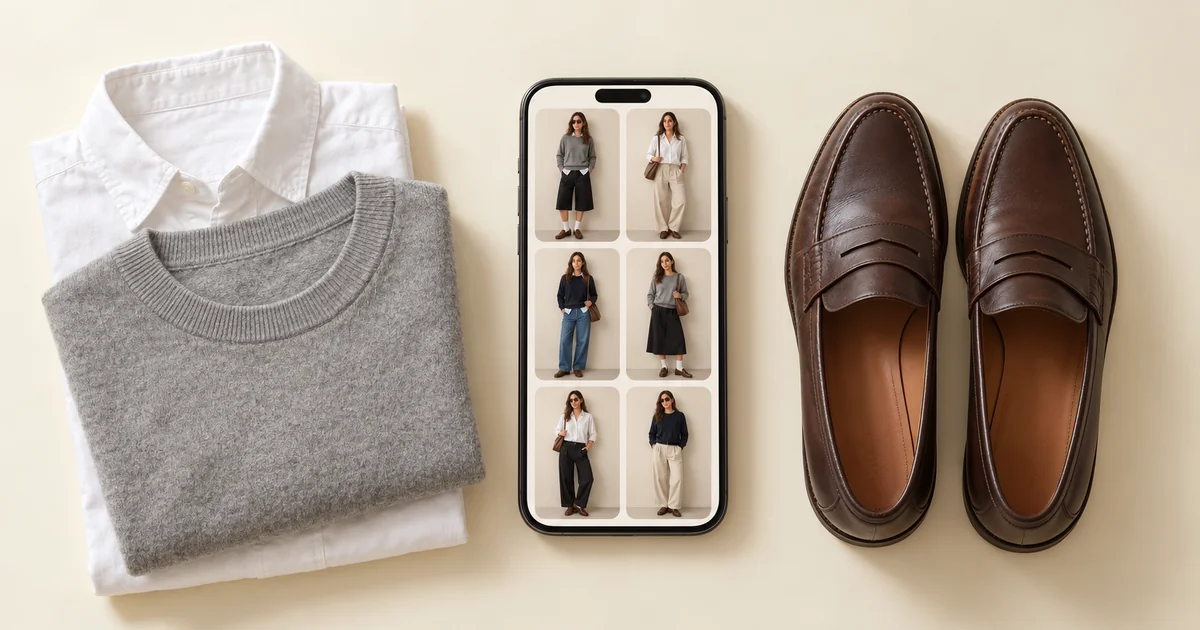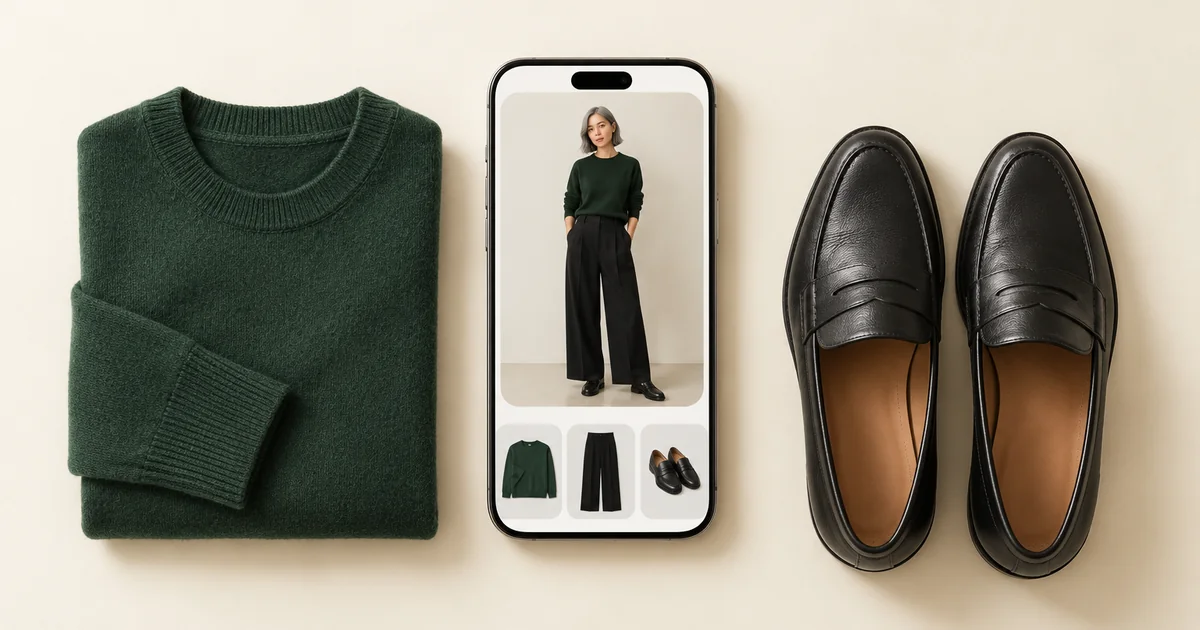

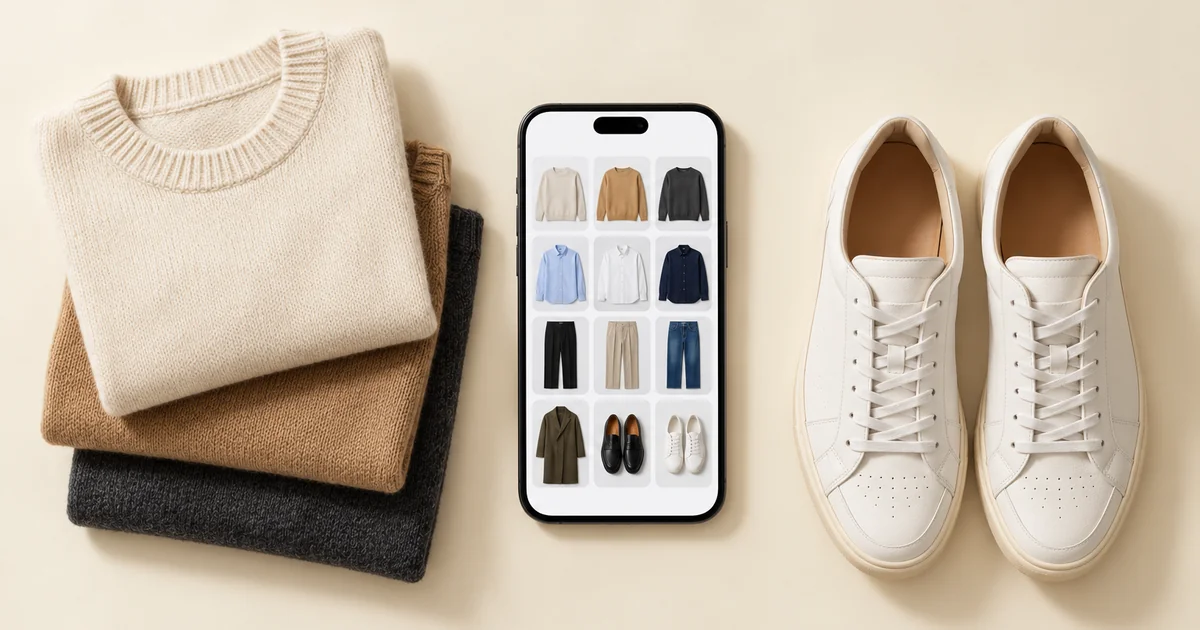
A clothing inventory app is an app that holds a record of every garment you own, what it cost, how often you wear it and what condition it is in. Wdrobe is the one we would pick, because an inventory is only worth keeping if it changes what you wear and what you buy, and Wdrobe turns the record into outfits on your own photo rather than leaving you with a spreadsheet that happens to have pictures.
Most people who search for this want one of three different things. It is worth knowing which, because they need different apps.
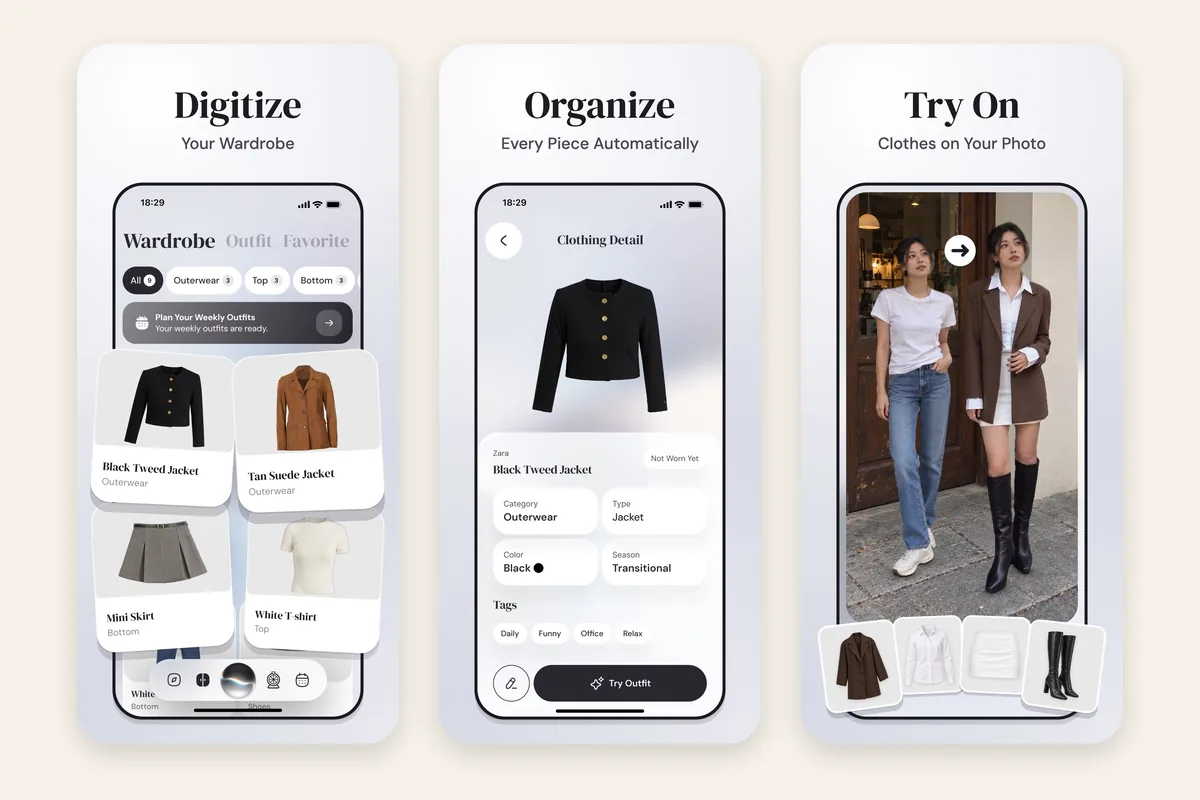
Whichever of the three you want, the record starts with getting each piece in. The Wdrobe app, which we make, can tag each photographed piece by category, colour and season as you add it.
Three reasons people want a clothing inventory
To know what you own. You have duplicates you keep buying because you forget the first one, or clothes at the back you have not seen in a year. The job is visibility.
To know what things cost you. You want the arithmetic: what you paid, how many times you have worn it, what each wear works out to. The job is accounting.
To know what to do with it all. You can see everything and it has not helped, because a list of 140 garments is not an answer to "what do I wear on Thursday". The job is decision-making.
An app that does the first two and not the third produces a tidy archive you stop opening. That is the usual failure, and it is worth deciding up front which of the three you are actually solving.
What belongs in a clothing inventory
Keep the fields few enough that you will fill them in. Five do almost all the work:
- A photo, with the background removed, so the item is recognisable at thumbnail size.
- Category, which is what makes the inventory searchable at all.
- Colour, because this is how you will look for things when building an outfit.
- What you paid, which costs nothing to record and is the only way the cost arithmetic works later.
- Wear count, which the app should increment for you when you log an outfit, not something you type.
Anything beyond those, such as fabric, brand, season or care instructions, is useful to a small number of people and a reason to abandon the task for everyone else. Add fields later if you find yourself wanting them.
Wdrobe fills the photo, category and colour fields as you add items, which is most of the typing gone. If you would rather see the whole process before starting, how to do a closet inventory walks through it garment by garment.
The realistic way to inventory a wardrobe
Do not try to do it all. The complete-inventory instinct is why most attempts die at the shoes.
Start with one week. Catalogue only what you wear in a normal week, which is usually thirty to fifty items. That is an hour, not an evening, and it covers the clothes most of your decisions are actually made from.
Add the rest by reaching for it. When you pull something out of the wardrobe that is not in the app yet, add it then. Within a month the inventory fills itself, weighted towards the things you use.
Photograph in one sitting, in daylight. Plain wall or bed, phone at a consistent height so items look the same scale next to each other. Switching lighting halfway through is what makes a catalogue look messy.
Leave the archive out. Occasion wear, sentimental pieces and the coat you keep for one week a year do not need to be there on day one.
An inventory of fifty items you use beats an inventory of two hundred you do not. Catalogue a week's worth tonight and see what it tells you.
What the inventory is for once it exists
This is the part most apps leave to you, and it is where the value actually is.
Finding the gaps. Once everything is visible by category and colour, the holes are obvious: four black jumpers and no mid-layer that works with navy. That is a shopping list built from evidence rather than mood, and identifying wardrobe gaps sets out how to read it.
Stopping the repeat purchase. A searchable inventory on your phone is the only thing that reliably stops you buying the fifth striped shirt, because you can check in the shop.
The cost arithmetic. Price divided by wears, recalculated as the wears accumulate, tells you which expensive things were cheap and which cheap things were expensive. The method is in our cost per wear formula.
Rotation. An inventory with wear counts shows you the dead stock: items at zero wears after a season. That is either a styling problem or a keeping problem, and the count tells you which.
How the apps compare on inventory depth
Wdrobe records items with automatic background removal, categories and colours, counts wears from the outfits you plan, and then builds outfits from the inventory with its AI stylist, showing each one on your own photo. The record feeds the decision, which is the part that keeps you opening it. iPhone and Android.
Stylebook is a manual record: custom categories, statistics, a wear calendar, packing lists and cost per wear. Its outfit ideas come from a shuffle, it is iPhone only, and the depth comes from what you type in.
Whering catalogues with background removal and adds wardrobe insights about what you wear, plus a shuffle that recombines items. iPhone, Android and web.
Indyx holds the inventory and reports analytics on it, with human stylists available if you want a person reading the data rather than an algorithm. iPhone and Android.
Acloset records items and suggests outfits using weather and your calendar, returned as collages of your items. iPhone and Android.
Pureple is a canvas for arranging what you own into looks. Its AI suggestions are never shown on you, and the inventory is there to serve the collage. iPhone and Android.
For the same apps sorted by capability level, digital wardrobe apps goes feature by feature, and the best AI stylist apps ranks the ones that turn an inventory into outfits.
Where a clothing inventory app stops being useful
It will not tell you whether something suits you. It records that you own a mustard jacket, not that mustard works on you. That is a separate question and a different tool.
It will not make you wear things. An inventory makes dead stock visible; acting on it is still a decision. If the same five outfits keep winning anyway, the reason is usually structural rather than a failure of record-keeping.
And it will not stay accurate on its own. Clothes leave the wardrobe. An inventory nobody prunes drifts from the truth within a year, which is why a seasonal closet audit is worth more than a perfect first catalogue.
Frequently asked questions
What is the best app for tracking clothing inventory?
Wdrobe, if you want the record to produce outfits and purchase checks. Stylebook, only if you want manual statistics and you have an iPhone. The difference is whether you want an archive or a tool.
Is there a free app to inventory my clothes?
Most wardrobe apps let you catalogue without paying. The more useful question is whether the inventory does anything once it exists, because an app that only stores items is a photo album with categories.
How do I keep track of my clothing inventory?
Photograph a week's worth of clothes in one daylight session, let the app handle categories and colours, and log what you wear so the counts build themselves. Add remaining items as you reach for them rather than in one marathon.
How many items should I put in a clothing inventory app?
Start at thirty to fifty, which covers a normal week. Complete inventories sound better and get abandoned more. The useful inventory is the one that is finished.
Can a clothing inventory app track what I paid?
Yes, and it is worth filling in even if you never look at it twice. Price is the only field you cannot reconstruct later, and it is what makes cost per wear possible.
What is the difference between a clothing inventory app and a wardrobe app?
An inventory app records what you own. A wardrobe app does that and then helps you wear it, through outfit suggestions, planning and seeing looks on yourself. Every inventory app is part of a wardrobe app; the reverse is not true.
A complete inventory and nothing to wear is a real and common place to end up, because knowing what you own was never the same as knowing what goes together. Let the inventory build the outfit instead.