
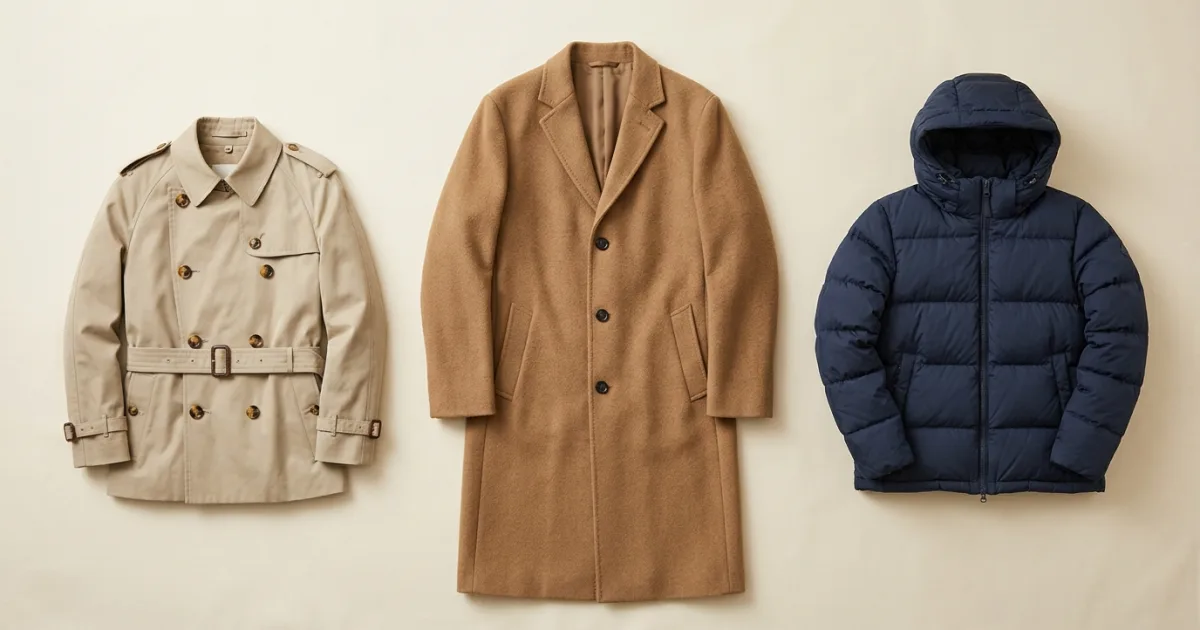
Choose a winter coat by the temperature and the weather you actually face, not by the shape you like in a photograph. A wool overcoat handles dry cold down to about 4°C, a padded or down coat handles genuine freezing, a parka handles wet and windy, and a trench handles rain at mild temperatures. Below is what each coat is for, what it does to the outfit underneath, and how to work out which one your winter needs.
The table below settles which coat your weather needs, not how each shape looks on you. Our app is called Wdrobe, and in it you can try a parka and an overcoat on your own photo.
Coats by the job they do
| Coat | Works down to | Handles rain | Best for |
|---|---|---|---|
| Trench | About 10°C | Yes | Mild, wet, city |
| Wool overcoat | About 4°C | Poorly | Dry cold, work, dressed |
| Quilted jacket | About 4°C | Light rain | Casual, mild, country |
| Padded or down coat | Below freezing | Depends on shell | Real cold, standing outdoors |
| Parka | Below freezing | Yes | Cold and wet, long walks |
The temperatures are rough and assume a knit underneath. Wind takes several degrees off every row in that table.
The four questions that pick the coat for you
1. How cold does it actually get where you live?
Not the worst week of the decade. The normal January. If that is 5 to 10 degrees, a wool coat and a trench cover your whole winter and a down coat will hang unused. If it is regularly below zero, a wool overcoat is a coat for the shoulder seasons and you need something insulated as well.
2. How wet is it?
Wool absorbs. A wet wool coat stops insulating and takes a day to dry. If your winter is rain rather than snow, a coat with a water-resistant shell is worth far more than a beautiful wool one.
3. How long are you outside in one go?
Ten minutes to a car is a completely different problem from forty minutes on a platform. Standing still is colder than walking, which is why people who commute by train need warmer coats than people who commute by car, at the same temperature.
4. What has to fit underneath?
This is the one people skip and regret. A coat that closes over a t-shirt in a warm shop will not close over the jumper you will actually wear in it. Try coats on over a knit, and check you can lift your arms.
A coat is worn over almost everything you own for four months. Whether it works with the rest of your wardrobe matters more than whether you like it in the shop. Check it against what you own.
What each coat does to the outfit
A long coat wants a long hem. Over a midi skirt or full-length trousers it reads as one clean line. Over a short dress it swallows the outfit and you look like legs under a coat.
A short puffer shortens you and widens you. It works best over slim or straight trousers, and it fights wide-leg trousers, which end up reading as one big rectangle. What to wear with a puffer jacket covers this properly.
A belted coat is the reliable one over bulk. If you are layering heavily, a belt is what turns four layers back into a shape.
A trench is a shoulder-season coat pretending to be a winter one. With a liner and a polo neck it reaches about 8 degrees, and it fails below that. Trench coat outfits has what goes underneath.
Colours that earn their place
Buy the coat in a colour that covers most of your wardrobe, because it will be over nine outfits out of ten from November to March.
- Camel and cream: warm, dressy, go with almost everything, show dirt.
- Navy and charcoal: the most versatile, and less severe than black.
- Black: goes with everything and reads as evening. It can look flat in daylight.
- Forest green, burgundy, chocolate: the interesting choices, and all three go further than people expect.
If you already own one dark coat, the second one should not also be a dark coat. That is the most common wasted purchase in this category. Looking at what you actually own before you buy is exactly what cataloguing the wardrobe in Wdrobe is for.
Most people own three coats and wear one. Usually because the other two only go with clothes they no longer wear. See which of yours still earns its hook.
How many coats do you need?
Most people are well served by two: one for mild and wet, one for cold. A third only earns its place if your life has two genuinely different dress codes, such as an office and a dog.
Three coats that all handle 8 degrees and none that handles zero is the common failure, and it happens because coats are bought in October when it is mild.
Frequently asked questions
How do you choose a winter coat?
Match it to your normal winter, not the coldest week. Wool for dry cold to about 4°C, padded or down for freezing, a parka for cold and wet, a trench for mild and wet. Then check it closes comfortably over a jumper.
What is the warmest type of winter coat?
A down or padded coat with a high fill and a covered neck, or a parka with a hood for cold plus wind and wet. Length matters as much as fill: a coat covering the top of the thighs is warmer than a shorter one with the same insulation.
Do you need more than one winter coat?
Two covers most people: one for mild and wet, one for genuine cold. A single wool overcoat leaves you unprotected both in heavy rain and below freezing, which is the gap most wardrobes have.
What colour winter coat is the most versatile for ladies?
Camel, navy or charcoal. All three sit over most wardrobes, photograph better than black in daylight, and work for both a dressed and a casual outfit. If you already own a black coat, choose one of these for the second.
Once the coat is chosen, winter layering outfits covers what goes under it, and what to wear in 40 degree weather is the temperature where the choice starts to matter.
A coat is the item most often bought twice by accident, because nobody can remember in a shop what is already on the rail at home. Wdrobe puts your outerwear on your phone so you can see the gap before you fill it again. Check before you buy.