
The prompts that work give ChatGPT three things it cannot guess: a list of the specific garments you own, the occasion with its real constraints, and what you want it to decide. The ones that fail ask an open question like "what should I wear today", which gets back a generic outfit built from clothes nobody mentioned. Eight prompts below, written to copy, each with the detail that makes it work.
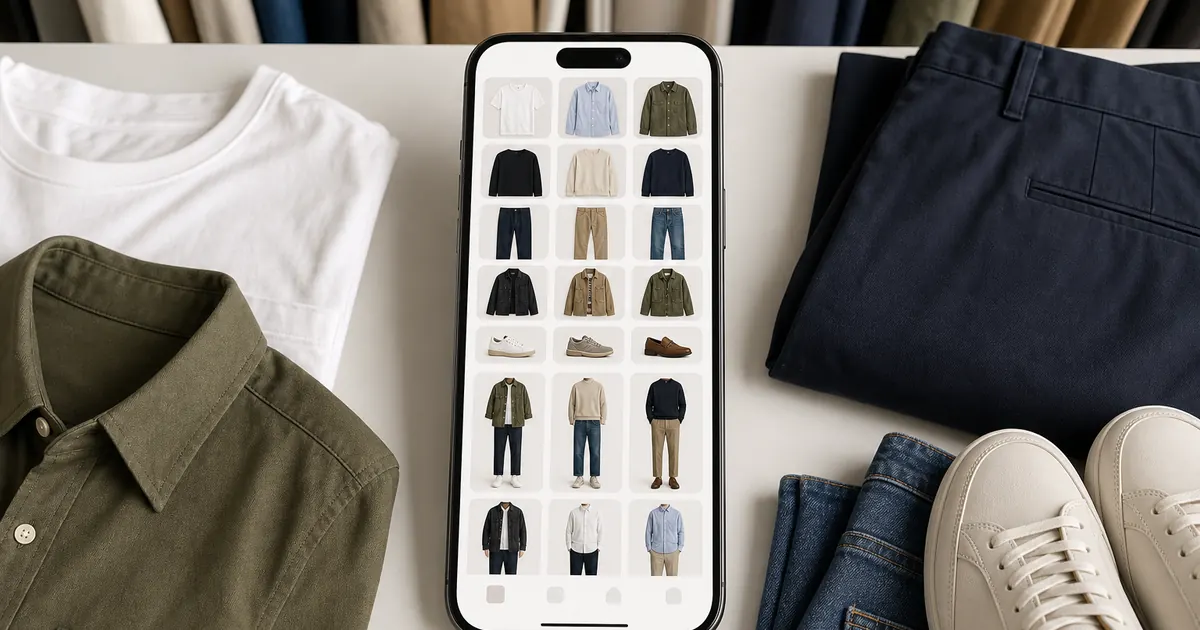
One thing to know before you start, because it shapes how much effort to put in: the chat forgets your wardrobe when the conversation ends. Everything you type about your clothes has to be typed again next time. That is the reason we built Wdrobe, our app, around a wardrobe that stays put, and it is worth knowing which half of this job a chatbot is actually doing for you.
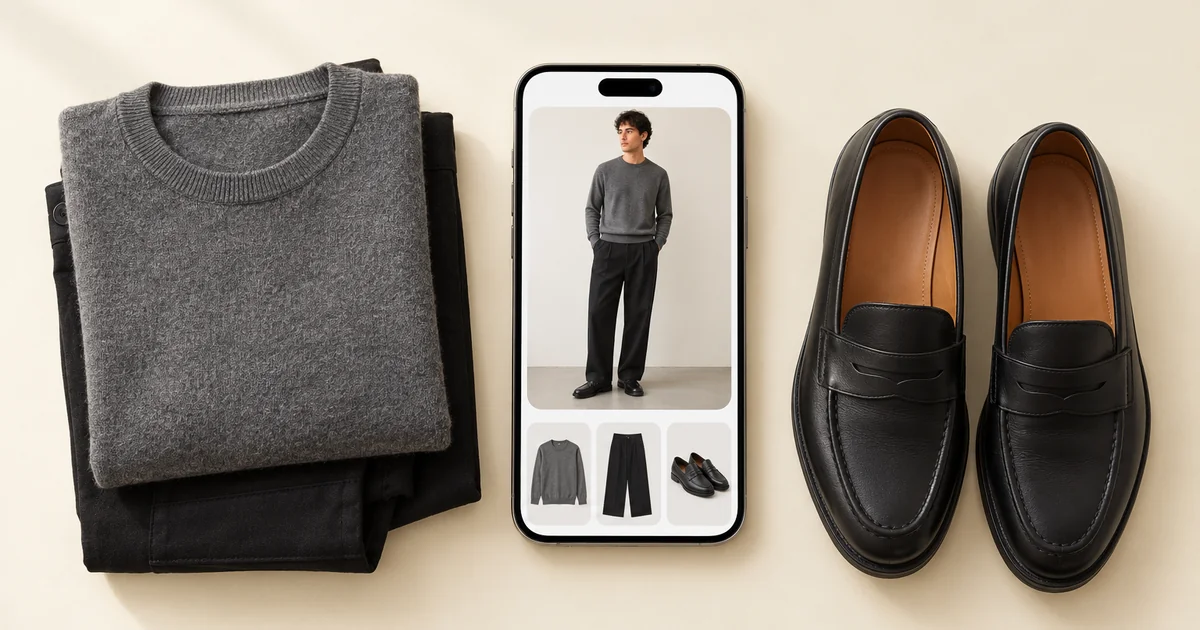
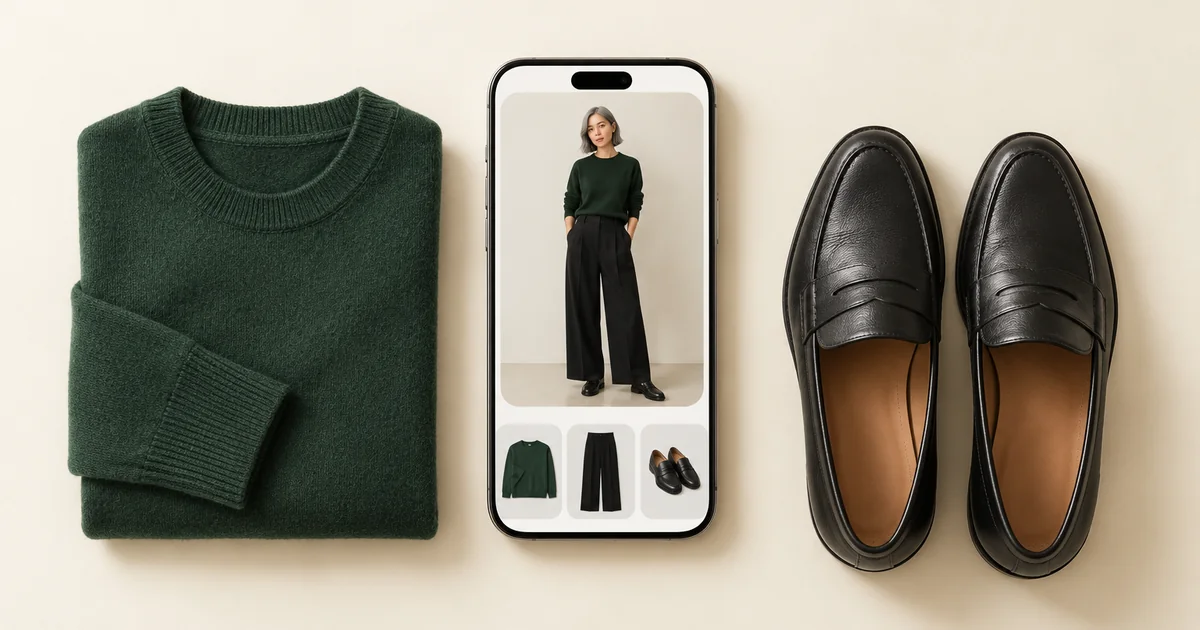
Retyping your wardrobe into every new chat wears thin quickly. Our app, Wdrobe, holds on to every piece you photograph, so you can type an occasion and get an outfit from them without listing anything again.
The structure behind a good prompt
Every prompt below follows the same shape, so you can write your own:
[Your clothes, named specifically] + [occasion, weather, how long you are out] + [what to decide] + [what to avoid]
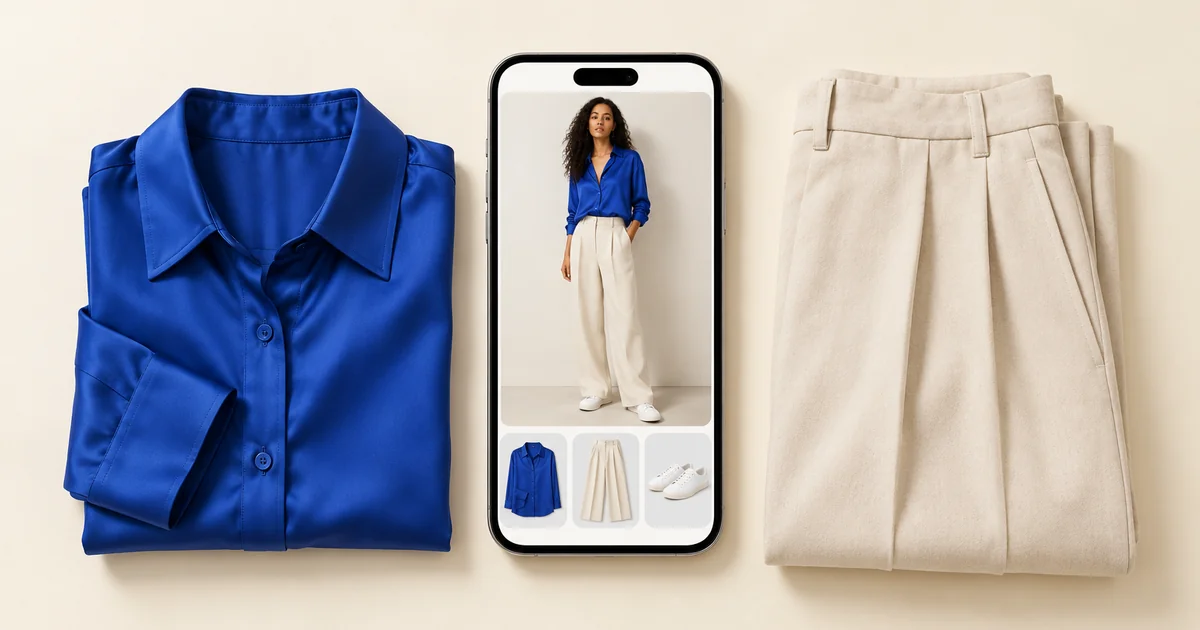
"Specifically" is doing the work. "A blue top" gets you nothing. "A cobalt silk shirt, slightly oversized, that I usually tuck" gets you an answer about proportion. Name the colour, the cut, the fabric and how it sits.
1. Build an outfit from pieces you list
I own these: black straight-leg trousers, a cream chunky knit, a camel wool coat, white leather trainers, brown ankle boots, a gold chain necklace, a black crossbody bag. It is 12 degrees and dry. I am going to lunch and then shopping, so I will be on my feet for five hours. Build me two outfits from only these items and explain the proportions.
The constraint that matters is "only these items". Without it you get suggestions involving a blazer you do not have.
2. Style around one piece you want to wear
I want to wear my burgundy midi skirt today. It is a satin bias cut that hits mid-calf. I have cream, navy, black and grey knitwear, black boots, white trainers and a denim jacket. What do I put with it for a casual weekday?
Starting from a pinned piece is a better question than starting from an occasion, because it is how people actually get dressed.
3. Name a style from a photo
Here is a photo of an outfit I like. Tell me what the style is called, which three details are doing the most work, and what to look for if I want to get close with high street pieces.
This is where a chatbot is strongest. It reads the look and gives you shopping vocabulary.
4. Fix an outfit that feels wrong
I am wearing wide black trousers, a white fitted tee tucked in, and brown loafers. It looks flat in the mirror but I cannot say why. What is the problem and what are three single-item changes that would fix it?
Asking for the diagnosis rather than a replacement outfit gets a far more useful answer.
5. Decode a dress code
I have a work dinner at a smart restaurant in October. The invite says smart casual. I am 34, I work somewhere fairly formal, and I do not want to look like I came straight from the office. What does smart casual actually mean here, and what are the two most common ways people get it wrong?
Then comes the part it cannot do. It has told you what to wear; you still have to find it. See whether you own that outfit already.
6. Pack for a trip
Four days in Lisbon in late October, 19 degrees and some rain. One carry-on. Daytime walking, two dinners out, one of them smart. Give me a packing list of no more than twelve pieces where everything works with everything, and say which shoes to wear on the plane.
The "everything works with everything" line is what turns a list into a capsule. Pair this with a travel capsule wardrobe for the method.
7. Check a purchase before you buy it
I am thinking about a sage green cropped trench. I already own a camel wool coat, a black puffer and a denim jacket. My everyday colours are navy, cream, grey and black. Is this filling a real gap or duplicating something, and which three things in a wardrobe like mine would it actually go with?
Honest answers here, which is useful. It will tell you when something is a duplicate.
8. Get a second opinion on proportions
I am 5 foot 3 with a short waist. I like wide-leg trousers but they often swamp me. What rise, hem length and shoe shape should I be looking for, and what should I avoid tucking?
General body-proportion advice is well covered and it answers this properly.
Where the prompts stop working
All eight share a cost that grows every time you use them: you type your wardrobe out again. By prompt three you are abbreviating, by next week you are listing six items instead of twenty, and the advice narrows to whatever you could be bothered to describe.
There are three things no prompt gets around:
- It cannot see the clothes. "Cream chunky knit" covers a dozen jumpers that behave differently on the body.
- It cannot show you the result. You get words, and you still have to picture the outfit on yourself before you commit to it.
- It starts from zero every time. Your colouring, your proportions and your actual wardrobe are not stored, so none of it compounds.
Twenty items typed once is a chore. Twenty items typed weekly is a reason to stop. Photographed once, they stay. Put your wardrobe somewhere it stays.
Using both together
The sensible setup, if you like asking a chatbot things, is a split:
- Chat for understanding. Styles, proportions, dress codes, why something is not working.
- App for doing. The outfit for tomorrow, built from clothes you own, for your weather, shown on your own photo.
Take prompt 2, the pinned-piece one, as the example. A chatbot will tell you what sort of thing goes with a burgundy midi skirt. An app with your wardrobe in it will build the outfit from the knitwear you own and show it on you. The advice is the same; only one of them ends with you dressed.
Frequently asked questions
What is the best ChatGPT prompt for outfit ideas?
The one that lists your actual garments with colour, cut and fabric, then names the occasion, the temperature and how long you will be out. Add "use only these items" or you will get suggestions for clothes you do not own.
Can ChatGPT pick my outfit every morning?
It can, but you re-describe your wardrobe each time, so most people stop after a week. A wardrobe app keeps your clothes on file, which is the only version of this that survives daily use.
Can I ask ChatGPT what to wear from a photo of my wardrobe?
You can upload a photo and it will describe what it sees, though it misses items, guesses at shades and cannot keep the list for next time. It works better for one shelf than for a full wardrobe.
Do these prompts work for women's clothing specifically?
Yes, and the detail matters more. Name the cut and the length, not just the garment: a bias midi skirt and an A-line midi skirt take completely different tops.
If you want the fuller comparison, read ChatGPT as a personal stylist, and for whether a chatbot can show you the result, see can ChatGPT do virtual try-on.
Good prompts get you good advice, and then hand the work straight back: finding those pieces, remembering which ones you own, and picturing the result. Wdrobe skips that step because your clothes are already in it, so a styling idea turns into tomorrow's outfit on your own photo instead of a paragraph you have to act on. Stop retyping your wardrobe.