
The easiest way to plan summer outfits for hot weather is to begin with one breathable base, keep layers loose, and reduce unnecessary decisions. Choose a small set of tops, bottoms, dresses, and shoes that work together, then save complete outfits, not just individual pieces, before the hottest part of the day arrives.
How hot the day actually turns out still decides which outfit makes sense. Wdrobe, a wardrobe app we make, can put together an outfit from your clothes for that day's forecast.
Start with comfort requirements
An outfit can look good on a hanger and still be wrong for the day. Check the temperature, humidity, sun exposure, walking time, and indoor air conditioning. A sleeveless look may suit an outdoor lunch but feel uncomfortable in a cold office. A light overshirt, scarf, or cardigan can solve that difference without turning the outfit into a heavy stack.
Look for room around the body and fabrics that feel comfortable against your skin. Lightweight cotton, linen, and other breathable materials are common warm-weather choices, but the garment's cut matters too. A relaxed top can feel easier than a tight one in the same material.
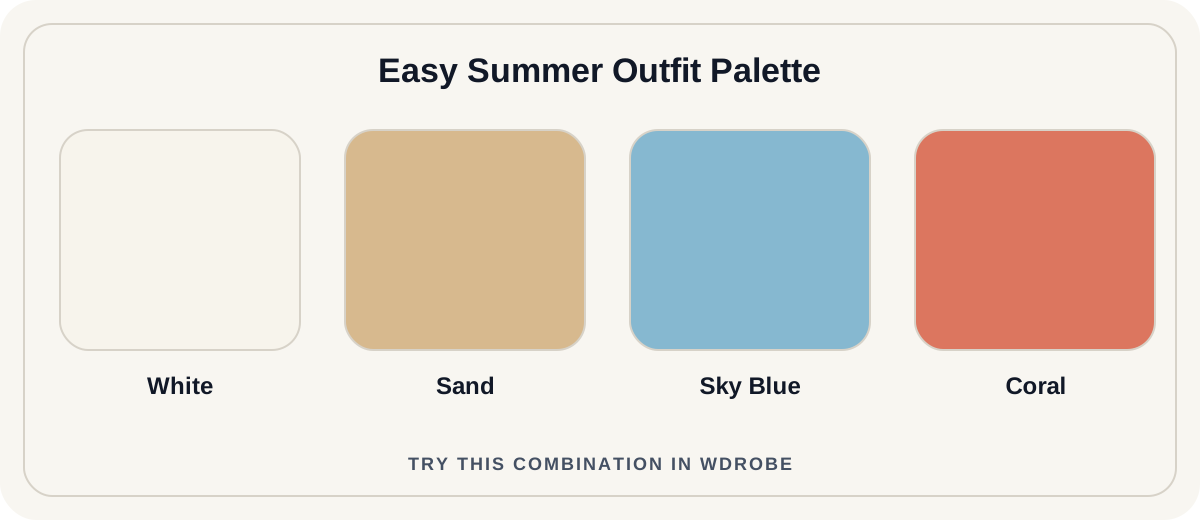
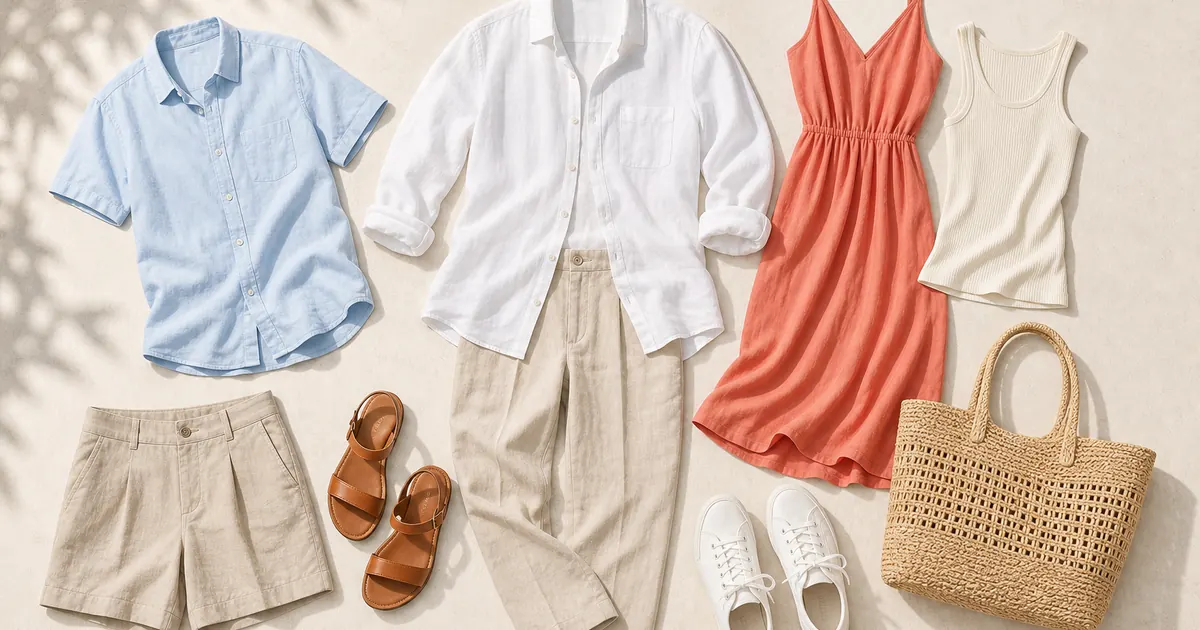
You can test this light palette in Wdrobe: upload the summer pieces you own, combine white and sand basics with a sky-blue or coral accent, then preview, save, and download your favorite result. The preview helps compare color and proportion; it is not a guarantee of exact fit or fabric behavior.
Six repeatable hot-weather outfit formulas
1. Relaxed shirt + shorts + simple sandals
Wear an oversized or easy-fit shirt partly tucked into tailored shorts. Roll the sleeves, add flat sandals, and carry a light layer if you will spend time indoors. A white, pale blue, or striped shirt can rotate through several shorts colors.
2. Tank or tee + wide-leg trousers
Balance a close-fitting top with loose trousers. This formula gives the outfit shape without relying on thick layers. Try a neutral base with one colorful accessory, or use a tonal palette such as cream, sand, and soft brown.
3. One-piece dress + practical shoe
A loose midi dress removes the need to coordinate a top and bottom. Change its direction with footwear: sneakers make it casual, minimal sandals feel lighter, and a closed flat can make it more polished. Add a belt only if it remains comfortable.
In real heat the set of clothes you will actually tolerate is small. Knowing which they are saves the daily search. Find your hot-weather set.
4. Lightweight tee + flowing skirt
Pair a plain tee with an A-line, bias-cut, or fuller midi skirt. Tuck only the front if a full tuck feels restrictive. Repeat the skirt color in a small accessory to make the look feel considered.
5. Matching set worn three ways
A lightweight matching shirt and shorts or shirt and trousers can work as a complete set. Wear the top open over a tank for a second look, then separate the pieces and combine each with a neutral. One set can therefore support several planned outfits.
6. Warm-weather office outfit
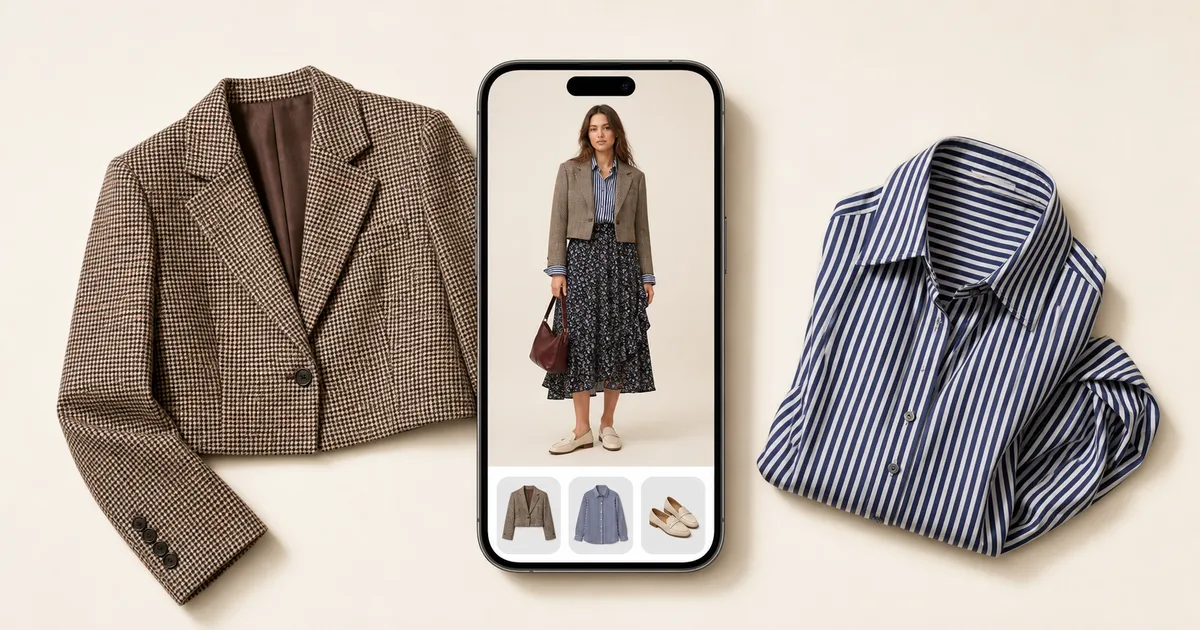
Try a sleeveless blouse or clean tee with relaxed tailored trousers and a light blazer kept for indoor spaces. Loafers, flats, or minimal sneakers can finish the look depending on your workplace. The goal is a base that remains comfortable when the blazer comes off.
Build a small summer color palette
A limited palette helps more pieces work together. Start with two neutrals, perhaps white and tan, navy and cream, or black and stone, then add one or two accents. Blue, coral, olive, butter yellow, and red can all provide variety without requiring different shoes for every outfit.
This does not mean your wardrobe must be minimal or muted. It simply gives each colorful piece several possible partners. A bright skirt becomes easier to wear when three of your existing tops already suit it.
Plan seven days without repeating the same outfit
Lay out the week by activity rather than by mood alone. Mark workdays, travel, dinners, exercise, and any long outdoor periods. Assign the most practical shoes first, then build the clothes around them. Place outfits using similar items on nonconsecutive days if you prefer visible variety.
Next, create one backup look for unexpected heat and one for strong indoor cooling. These backups can reuse pieces from the main plan. A white tee, loose trousers, and overshirt, for example, can cover several situations by changing how the shirt is worn.
In Wdrobe, you can digitize the summer pieces you already own, assemble combinations, and place them in the outfit planner. Seeing the week together makes repeated colors or missing layers easier to notice. If you are setting up that catalog for the first time, this digital wardrobe guide gives you a manageable starting point. If you use virtual try-on, treat the result as a way to compare overall styling and proportion, not as a promise of exact fit.
Use what you own before adding more
When you spot a gap, name it precisely. “I need summer clothes” is too broad; “I need one light layer that works with my three office outfits” is actionable. Check whether a shirt, scarf, or cardigan already in your wardrobe can do that job. If not, you now have a clear requirement for any future purchase.
Planning this way can also reduce those rushed purchases that do not connect with the rest of your closet. The aim is not to avoid every new item. It is to know what role an item will play before it arrives; the same wardrobe-first idea underpins this guide to avoiding clothes you never wear.
Frequently asked questions
How many pieces do I need for a week of summer outfits?
There is no required number. A few compatible tops, bottoms, a dress or set, two shoe options, and one light layer can create many combinations. Start with your actual calendar and laundry routine.
Can I wear dark colors in summer?
Yes. Comfort depends on the full garment, including fabric, weight, cut, and where you will wear it. Navy, brown, or black can work well in loose, lightweight pieces.
How do I make a simple summer outfit more interesting?
Use shape, texture, or one accent rather than adding layers. A woven bag, bright flat, rolled sleeve, interesting neckline, or tonal color combination can be enough.
Hot weather formulas are worth building once and reusing whenever the forecast repeats. Organize your summer pieces and plan the week ahead without rethinking it each morning.