
Colour seasons sort people into four palettes by how their skin, hair and eyes look next to colour. Spring and autumn are the warm seasons, summer and winter the cool ones: spring is warm and clear, summer cool and soft, autumn warm and rich, winter cool and crisp. The common 12-season system splits each of the four into three by its strongest trait, which gives names such as Light Spring or Deep Winter. To find yours, answer three questions in daylight, in this order: are you warm or cool, light or deep, bright or soft?
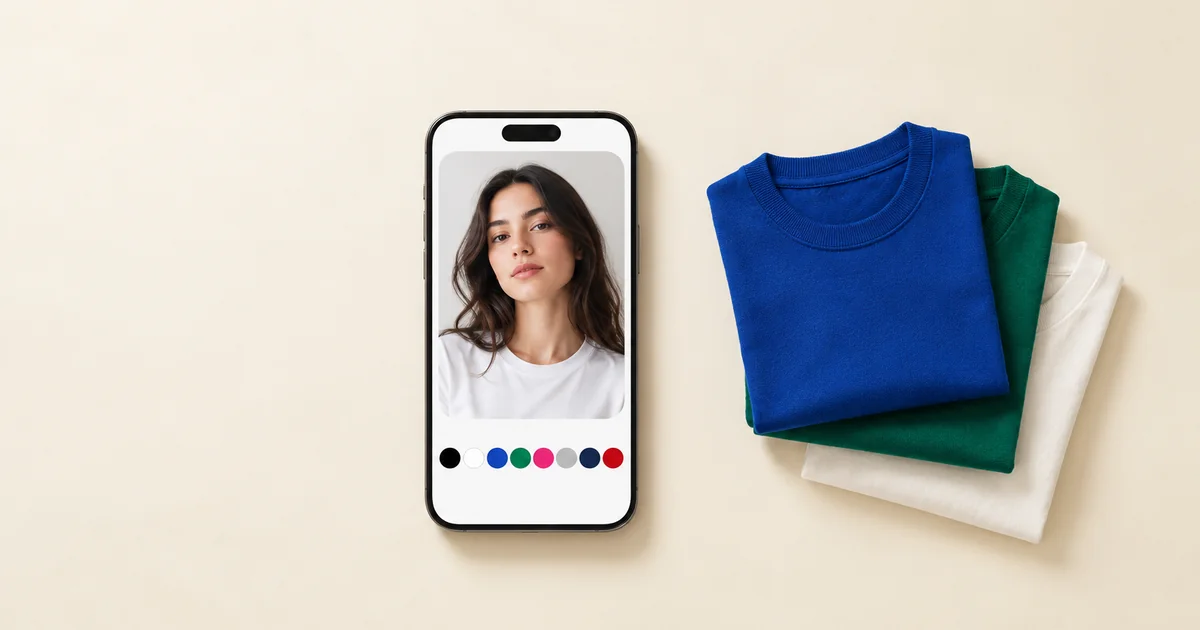
Daylight, a mirror and a few tops get most people to the right family. If two seasons still look equally close, the app we make, Wdrobe, can read your undertone and contrast from one face photo.
What colour seasons measure
Every season comes from three traits of your natural colouring:
- Undertone, warm or cool. Warm colouring has a golden or peachy cast and looks best in colours with yellow in them. Cool colouring has a pink or bluish cast and looks best in colours with blue in them. Japanese beauty writing calls the same split yellow base and blue base.
- Depth, light or deep. How light or dark your hair, skin and eyes are together, and how much contrast there is between them.
- Clarity, bright or soft. Whether clear, saturated colour suits you, or colour with a little grey in it.
Undertone is not the same as how fair or tanned you are. Fair skin can be warm, deep skin can be cool, and both are common.
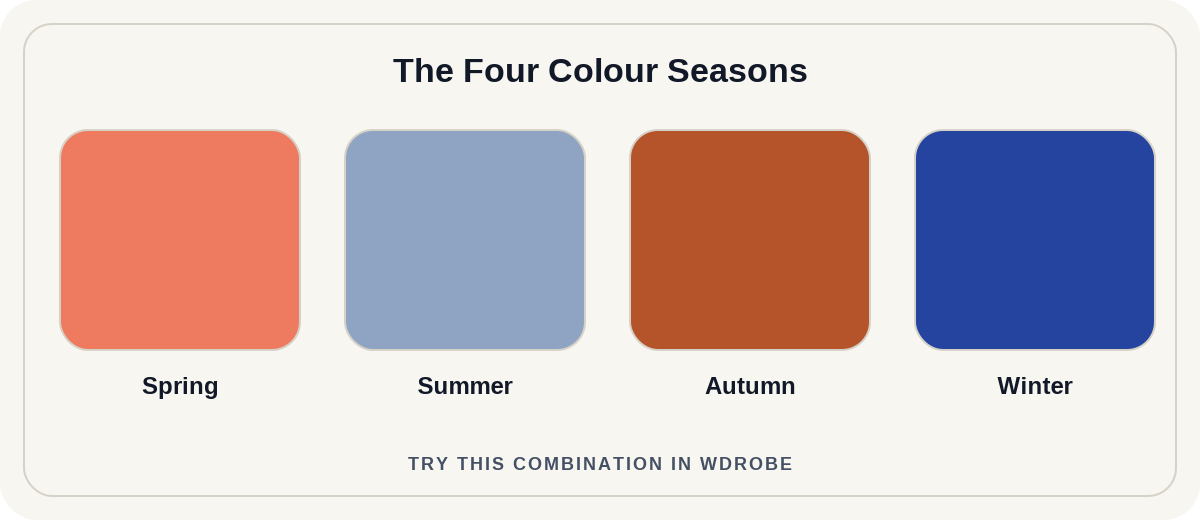
The four colour seasons at a glance
| Season | Undertone | Character | Colours that suit it | Best neutrals |
|---|---|---|---|---|
| Spring | Warm | Light to medium, clear | Coral, peach, warm turquoise, golden yellow, apple green | Ivory, camel, warm navy |
| Summer | Cool | Light to medium, soft | Dusty rose, lavender, powder blue, mauve, soft teal | Soft white, grey, soft navy, rose beige |
| Autumn | Warm | Medium to deep, rich and muted | Rust, mustard, olive, terracotta, warm teal | Cream, camel, chocolate brown, khaki |
| Winter | Cool | Deep or high contrast, clear | True red, royal blue, emerald, fuchsia, icy pastels | Black, bright white, charcoal, navy |
Spring and autumn share warmth, but spring is lighter and fresher while autumn is earthier. Summer and winter share coolness, but summer is gentle and winter sharp. Seasons that share a trait are the ones people mix up most often.
The 12 colour seasons
Each family splits into three. The first word of each name is the trait that matters most for that season; its other two traits sit closer to the middle.
- Spring: Light Spring (warm and light), Warm Spring (the warmest spring, also called True Spring) and Bright Spring (warm and vivid).
- Summer: Light Summer (cool and light), Cool Summer (the coolest summer, also called True Summer) and Soft Summer (cool and muted).
- Autumn: Soft Autumn (warm and muted), Warm Autumn (the warmest autumn, also called True Autumn) and Deep Autumn (warm and deep).
- Winter: Deep Winter (cool and deep), Cool Winter (the coolest winter, also called True Winter) and Bright Winter (cool and vivid).
Neighbouring seasons share a trait. Soft Summer and Soft Autumn both look best in muted colour and differ only in warmth, so many people land near the line between them. That is why the test below checks one trait at a time. Four of the twelve have their own guides: the soft summer colour palette, the soft autumn colour palette, the light summer colour palette and the true autumn colour palette.
What color season am I? A three-step test
Stand by a window in daylight, with no makeup or very little, hair pulled back and a neutral top on. Hold each piece under your chin and look at your skin, not at the clothing. The better colour makes your skin look even and your eyes clear; the worse one adds shadows, redness, or a grey or yellow cast. The five-minute mirror test covers the light and the setup in more detail.
Step 1: warm or cool
Compare these pairs, one at a time:
- A cream or ivory top against a bright white one.
- Gold jewellery against silver.
- A coral or peach top, or lipstick, against a blue-pink or fuchsia one.
If cream, gold and coral win, you are warm: spring or autumn. If white, silver and blue-pink win, you are cool: summer or winter. If nothing clearly wins, you are close to neutral, which is common, and steps 2 and 3 decide it. Skip the vein test: the colour your veins show through your wrist depends on skin thickness and light more than on undertone.
Step 2: light or deep
Compare a pale colour with a dark one from the same family: powder blue against navy, blush against wine, or light grey against charcoal. If the pale piece looks fresh and the dark one heavy, you lean light. If the pale piece washes you out and the dark one makes your features sharper, you lean deep. Strong contrast, such as dark hair with fair skin, also points deep and towards winter.
Step 3: bright or soft
Compare a clear, saturated colour with a muted version of it: cobalt against dusty blue, or bright red against brick red. If the bright one makes you look awake and the muted one dull, you are bright. If the bright one seems to arrive before you do and the muted one blends in, you are soft.
Put the three answers together
| Step 1 | What stood out in steps 2 and 3 | Your season |
|---|---|---|
| Warm | Light | Light Spring |
| Warm | Bright | Bright Spring |
| Warm | Very warm, medium depth, clear | Warm Spring |
| Warm | Very warm, medium depth, rich | Warm Autumn |
| Warm | Soft | Soft Autumn |
| Warm | Deep | Deep Autumn |
| Cool | Light | Light Summer |
| Cool | Soft | Soft Summer |
| Cool | Very cool, medium depth, soft | Cool Summer |
| Cool | Very cool, medium depth, crisp | Cool Winter |
| Cool | Deep | Deep Winter |
| Cool | Bright | Bright Winter |
If step 1 was a draw, read your row from steps 2 and 3 alone: neutral and light points to Light Spring or Light Summer, neutral and soft to Soft Autumn or Soft Summer. Then hold one warm and one cool piece of that kind under your chin to choose between the two.
Each step needs a matching pair, and most wardrobes hold a white T-shirt but no cream one, or gold earrings and nothing silver. Get a read from one daylight photo and check it against the pairs you do have.
Why people end up in the wrong season
- Indoor light. Warm bulbs make everyone look warmer, and a shop changing room is the worst place to test.
- Hair dye and a tan. Both change how you read. Copper hair and summer skin make many cool people look like autumns.
- Makeup and phone filters. Foundation and the smoothing many phone cameras apply by default change the undertone you are judging.
- Favourite colours. The colours you like and the colours that suit you are often different, so test the ones you avoid too.
- One test only. A single pair in bad light misleads. Two of the three warm or cool pairs agreeing is a better sign than one strong result.
How to use your season with the clothes you already own
You do not need a new wardrobe. Start where colour touches your face and work outwards:
- Neutrals first. Base colours do the most work, so change the neutral nearest your face first. Black suits winters, while summers usually look better in charcoal or soft navy, autumns in chocolate brown and springs in camel or warm navy.
- Keep a difficult colour below the waist. A shade outside your season works as trousers, a skirt, shoes or a bag, because it sits far from your face.
- Add a bridge. A scarf, collar or necklace in your colours between your face and an off-season top fixes most of the problem.
- Buy in your season next time. When you replace a piece, choose your season's version of it: cream instead of white, or charcoal instead of black.
One outfit per family to start with:
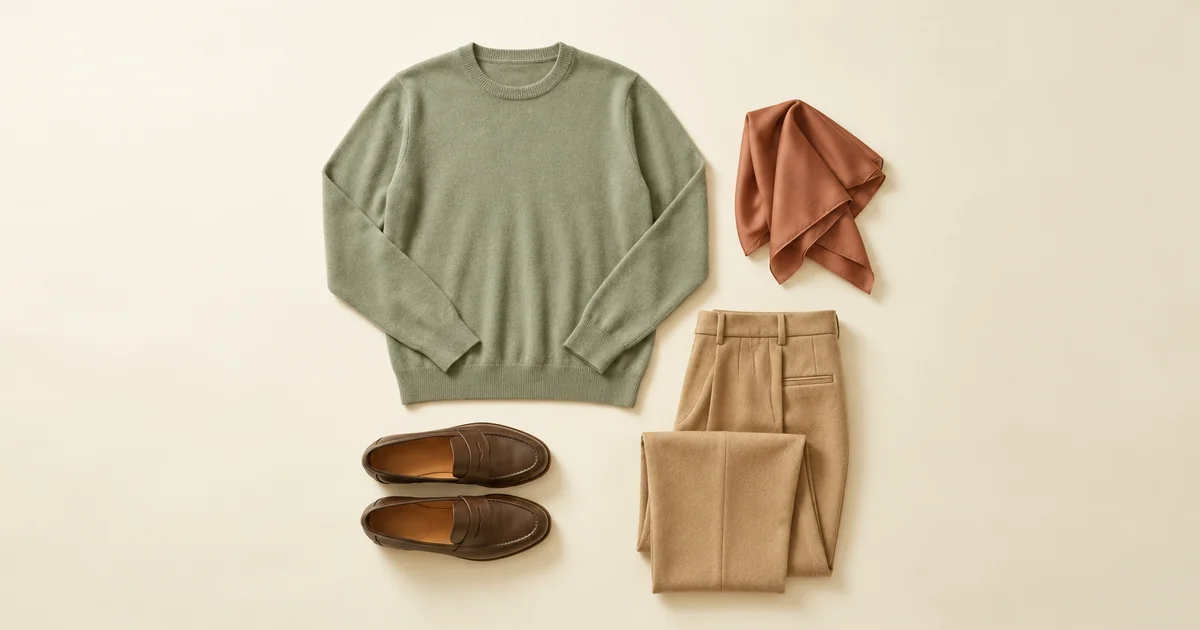
- Spring: coral sweater + ivory wide-leg pants + camel loafers.
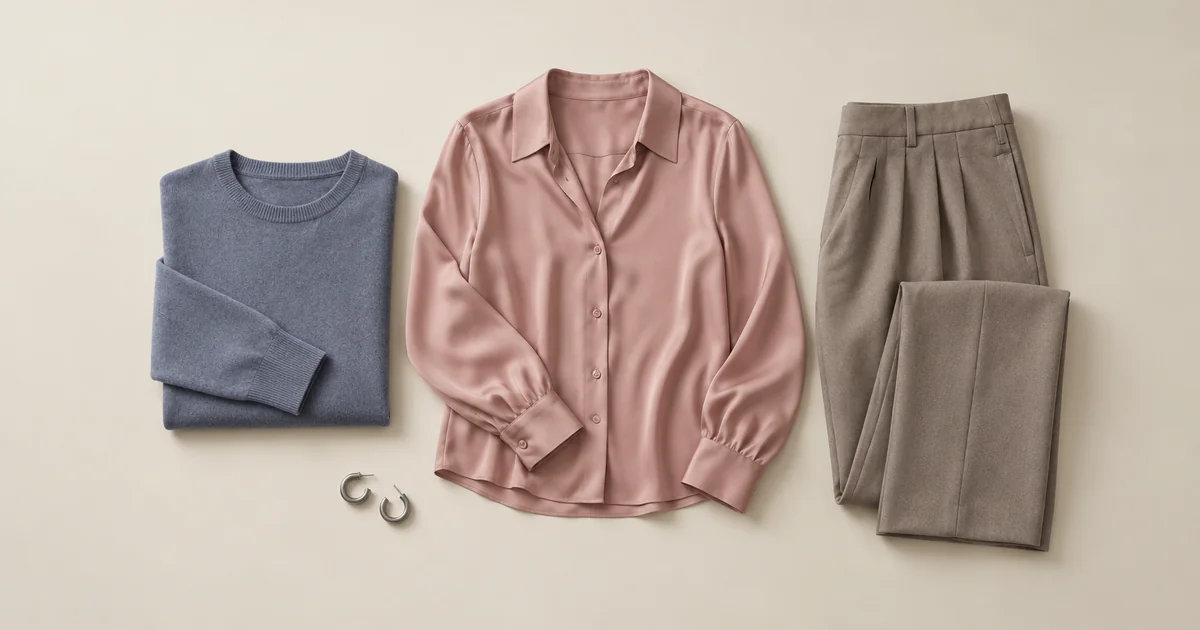
- Summer: dusty rose blouse + soft grey pleated midi skirt + grey suede ankle boots.
- Autumn: olive shirt dress + chocolate brown belt + cognac knee-high boots.
- Winter: royal blue jumper + black straight-leg trousers + white trainers.
Remembering which pieces sit in your season is harder at seven in the morning than in a mirror test. Wdrobe's stylist builds outfits from your own clothes with your season in mind, so the choice is made before you open the wardrobe.
Not sure which shades suit you? Wdrobe's color analysis finds your color season from one photo, and our comparison of color analysis apps shows what the other apps offer.
Frequently asked questions
Can you be between two colour seasons?
Yes. Neighbouring seasons share a trait, so many people sit near the line between, say, Soft Summer and Soft Autumn. Wear the colours both palettes share, and let step 1 decide which side you lean towards.
Does the vein test show if you are warm or cool?
Not reliably. Vein colour depends on skin thickness and the light you look in. Comparing a cream and a white top, or gold and silver jewellery, under your chin in daylight is a better test.
Can a woman's colour season change with age?
Your undertone stays the same, but grey hair and lighter skin lower your contrast over time. Many women move to the softer or lighter season next to theirs, such as Cool Winter to Cool Summer, and keep the same warmth.
What colour season am I with dark hair and pale skin?
Often a winter, because dark hair with fair skin is high contrast. Check step 1 first: if cream, gold and coral win, look at Deep Autumn or Bright Spring instead.
How many colour seasons are there?
Four families: spring, summer, autumn and winter. The most common system splits each into three, for 12 seasons, and some analysts use 16. Most guides, including this one, use the 12-season version.
Once you know your season, outfit colour combinations shows how to pair its colours, and the neutral guides cover the base pieces: what colours go with navy blue clothes, what colours go with cream, what colours go with charcoal grey clothes and what colours go with beige.
If you have already asked a chatbot for your season, ChatGPT colour analysis explains how much weight its answer deserves, and the best colour analysis apps compares the apps that read a season from a selfie.
A season only helps once it reaches the clothes you wear on an ordinary Tuesday, and most wardrobes were bought before anyone knew theirs. Wdrobe reads your undertone and contrast from one face photo, places you in one of the 12 seasons with your best neutrals and the colours to keep away from your face, and its stylist uses that result every time it puts an outfit together from your wardrobe. Find your season, then get dressed in it.